

A garage door spring is one of those parts nobody thinks about until the morning it snaps and the door refuses to budge. For homeowners across Richmond, TX, that surprise tends to show up at the worst possible time, usually on a busy weekday when the car is stuck inside. Knowing how long these springs really last, and when garage door spring repair is needed, can help you plan ahead instead of getting caught off guard.
Below is a clear, no-fluff breakdown built from years of hands-on garage door experience, written so any homeowner can follow along.
Quick Answer: The Short Version on Spring Lifespan
Most garage door springs last between 7 and 12 years. That range assumes a standard spring rated for around 10,000 cycles and a door that gets opened and closed a few times a day.
A “cycle” means one full open and one full close. So the real lifespan depends less on the calendar and more on how often the door moves. A family that uses the garage as the main entrance will burn through cycles faster than a household that rarely touches it.
In the Richmond climate, with its heat, humidity, and the occasional cold snap, springs can wear slightly faster than the average if they are not cared for. More on that below.
Curious about what actually triggers a failure in the first place? Take a look at our guide on “What Causes Garage Door Springs to Break?“ for the full breakdown.
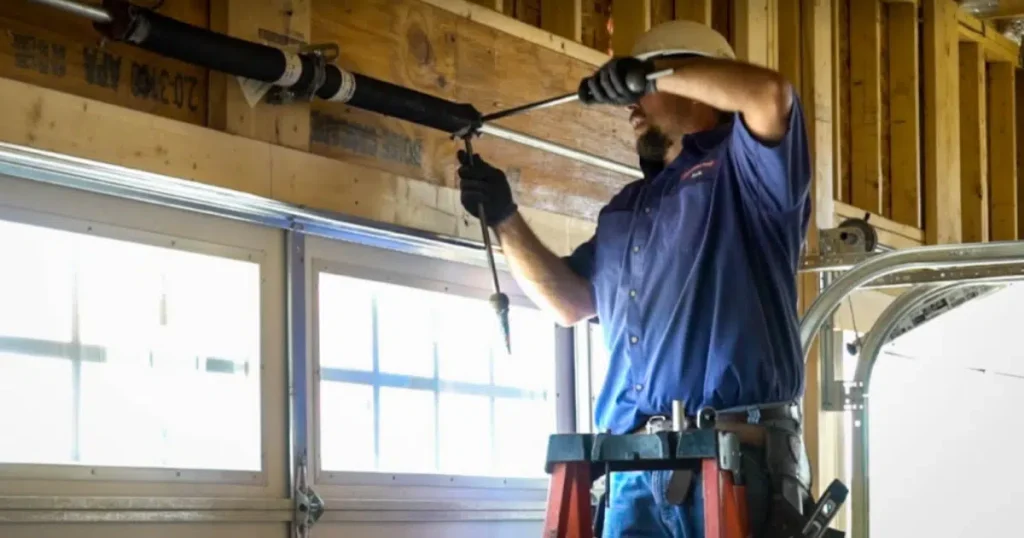
What Garage Door Springs Actually Do (And Why They Wear Out)
A garage door is heavy. Many doors weigh between 150 and 350 pounds. The opener motor does not lift all that weight on its own. The springs do most of the heavy lifting.
Springs store energy. When the door is down, they are wound tight and full of tension. When the door goes up, that stored energy releases and helps raise the panels smoothly. This is why a door with a broken spring feels like trying to lift a small boulder.
Every time the door moves, the metal in the spring stretches and twists just a little. Over thousands of cycles, the metal slowly fatigues. Eventually it gives out. That wear is normal and expected. No spring lasts forever.
Ever wonder why a spring lets go without any warning at all? Our article “Why Do Garage Door Springs Snap Suddenly?“ explains exactly what is going on behind that surprise bang.
The Two Main Types of Springs and How Long Each Lasts
Not all springs are built the same, and the type on your door affects its lifespan.
- Torsion springs sit on a metal shaft above the door opening. They are the more common and more durable option. A standard torsion spring is usually rated for around 10,000 cycles, which works out to roughly 7 to 10 years for most homes. High-cycle torsion springs rated for 20,000 or more cycles can last well past a decade.
- Extension springs run along the horizontal tracks on each side of the door. They are often found on older garage doors. These tend to wear out a bit faster and usually last around 7 to 9 years. They also require safety cables to keep them from flying loose if they snap.
If you are not sure which type your door uses, look above the door. A spring mounted on a center bar above the opening is a torsion spring. Springs stretched along the side tracks are extension springs.
Worried about how risky a worn spring really is? Our post “Are Worn Garage Door Springs Dangerous?“ covers the safety side every homeowner should know.
The Real Number: Understanding Spring “Cycles”
Lifespan in years can be misleading, so the industry measures springs in cycles instead. Here is a simple way to picture it.
A spring rated for 10,000 cycles can handle about 10,000 open-and-close trips before it is likely to fail. Now do the math on real life:
- Open and close the door twice a day, and 10,000 cycles last roughly 13 to 14 years.
- Open and close it four times a day, and that drops to about 7 years.
- Open and close it six or more times a day, and the spring may give out in 4 to 5 years.
Many Richmond households use the garage as their primary entry point. Kids leaving for school, trips to the grocery store, weekend errands, and commuting all add up quickly. A door that cycles eight times a day is not unusual, and at that rate even a quality spring will not reach the upper end of its lifespan.
This is why two neighbors with identical doors can have completely different experiences. Usage is everything.
7 Things That Make Springs Wear Out Faster in Richmond, TX
Local conditions matter more than most people realize. Here are the biggest factors that shorten spring life in the Richmond area.
- Humidity and moisture. The Gulf Coast brings plenty of humid days. Moisture leads to rust, and rust eats away at spring metal, weakening it over time.
- Heat and temperature swings. Hot Texas summers followed by sudden cold fronts cause metal to expand and contract. That constant movement adds stress to the spring.
- Lack of lubrication. A dry spring grinds against itself with every cycle. This is one of the most common and most preventable causes of early failure.
- Heavy door usage. As covered above, the more the door moves, the faster the springs age.
- Improper spring sizing. A spring that is too light for the door weight gets overworked from day one. This often happens when a cheap or wrong part was installed.
- Poor balance. When a door is out of balance, the springs and the opener both strain harder than they should.
- Skipping maintenance. Springs that never get checked or serviced almost always fail sooner than ones that get a little attention each year.
Warning Signs a Spring Is About to Break
Springs rarely fail without dropping a few hints first. Catching these early can save a lot of stress. Watch for the following.
- A loud bang from the garage. A snapping spring often makes a sharp pop, similar to a firecracker. This is the most obvious sign.
- The door feels heavy or will not open. If the opener struggles or the door barely lifts, a spring may have failed.
- A visible gap in the spring. A broken torsion spring usually shows a clear two-inch separation in the coil.
- The door opens crooked. One side lifting faster than the other points to a spring or balance problem.
- Jerky or shaky movement. A door that bounces or moves unevenly is asking for attention.
- Loud squeaking or grinding. Noisy operation often means the springs are dry or worn.
- The door closes too fast. A weak spring no longer slows the door, so it drops harder than normal.
If any of these show up, stop using the door. Forcing a door with a damaged spring can cause more damage to the opener and tracks.
What to Check Before Calling a Pro
A few safe, hands-off checks can help you understand the problem before a technician arrives. None of these involve touching the spring itself.
- Look at the spring from a safe distance. A clear gap in a torsion spring confirms a break.
- Test the balance with the opener off. With the door safely lowered, pulling the manual release cord and lifting by hand can reveal how heavy it feels. A healthy door should lift fairly easily and stay put halfway up. A door that slams down or feels like dead weight points to a spring issue.
- Listen during operation. Note any new noises and when they happen.
- Check for rust. Visible orange flaking on the spring is a sign of weakening metal.
- Inspect the cables. Frayed or loose cables often go hand in hand with spring trouble.
Keep all of this strictly observational. The spring is under extreme tension, and the actual repair belongs in trained hands. Detailed below is why that matters.
How to Make Garage Door Springs Last Longer
The good news is that springs respond well to a little care. These steps can add years of life and are especially helpful in the Richmond climate.
- Lubricate the springs twice a year. A quality garage door lubricant, not a general spray oil, keeps the coils moving smoothly and fights rust. Spring and fall are ideal times.
- Keep the springs clean and dry. Wiping away dust and checking for moisture helps slow down rust in humid months.
- Schedule a yearly tune-up. A professional balance check and inspection catches small problems before they turn into broken springs.
- Do not overuse the door. Try to avoid opening it for tiny reasons when a side door would do.
- Replace springs in pairs. When one goes, the other is usually close behind. Replacing both keeps the door balanced and avoids a second service call soon after.
- Watch the door’s balance. A door that suddenly feels heavier deserves a look right away.
Consistent maintenance is the single biggest factor a homeowner controls. A well-cared-for spring can comfortably reach the top of its expected lifespan.
When Replacement Is the Smart Move (And What It Usually Costs)
Once a spring breaks or shows serious wear, replacement is the only real fix. Springs cannot be “repaired” back to full strength once the metal has fatigued.
A few signs it is time to replace rather than wait:
- One spring has already snapped.
- The door is well past the 7 year mark and getting noisy or heavy.
- Rust has set in on the coils.
- The door fails the balance test.
On average, garage door spring replacement is a moderate, affordable repair compared to replacing an entire door or opener. The average cost depends on the spring type, the door weight, and whether one or both springs are being changed. High-cycle springs cost a bit more upfront but tend to pay off over time because they last longer. A local Richmond technician can give an exact quote after seeing the door, since pricing changes with the specifics.
A smart move for older doors is to upgrade to higher-cycle springs during replacement. The slightly higher average cost often means fewer service calls down the road.
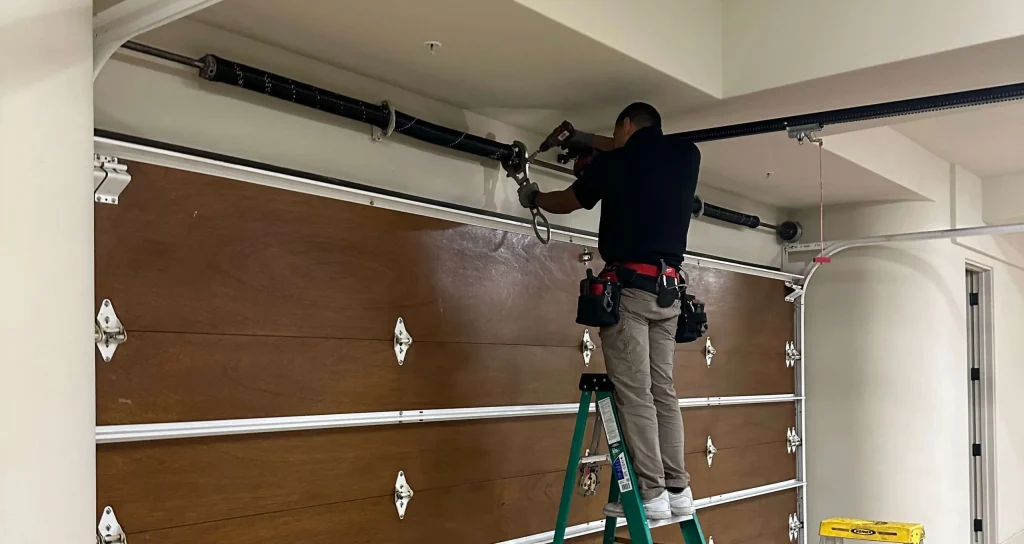
Why Spring Work Is Best Left to a Professional
This part is worth saying plainly. Garage door springs are under enormous tension. A torsion spring stores enough force to cause serious injury if it releases unexpectedly. Every year, people get hurt trying to swap springs without the right tools or training.
A trained technician has the proper winding bars, knows the exact tension settings, and can spot related issues like worn cables, bad rollers, or an unbalanced door. Proper installation also protects the spring’s lifespan, since an incorrectly wound or wrong-sized spring fails early.
For Richmond homeowners, the safest and most cost-effective path is a quick call to a local garage door pro. The repair is usually fast, and it removes all the risk. This guide is meant to help you understand the problem and ask the right questions, not to walk through the hands-on fix itself.
Protect Your Door, Opener, and Family
Garage door springs are a wear part, plain and simple. Most last 7 to 12 years, but the true number comes down to how often the door runs and how well the springs are maintained. In a humid, hot-and-cold climate like Richmond, TX, a little upkeep goes a long way.
Keep an eye out for the warning signs, lubricate the springs a couple of times a year, and book an annual tune-up. When a spring finally gives out, leave the replacement and any garage door spring installation to a qualified local technician who can do it safely and correctly. Doing that protects the door, the opener, and most importantly, the people using it every day.
Trusted Garage Door Help in Richmond, TX
When a spring wears out or snaps, First Call Garage Doors helps Richmond homeowners get back up and running fast. From spring replacement to full tune-ups, our team has the tools and experience to do the job safely and right the first time. Contact us today or give us a call to schedule your service.
Frequently Asked Questions
What does a "cycle" mean for garage door springs?
One cycle equals one full open and one full close. Standard springs are rated for about 10,000 cycles.
Which spring lasts longer, torsion or extension?
Torsion springs typically last longer and are more durable than extension springs.
What are the first signs a spring is failing?
A loud bang, a heavy door, a visible gap in the coil, or a door that opens crooked.
Can a garage door spring be repaired instead of replaced?
No. Once the metal fatigues or snaps, replacement is the only reliable fix. For more on the basics of garage door repair, Family Handyman is a helpful resource.
Should both springs be replaced at the same time?
Yes. When one fails, the other is usually close behind, so replacing both keeps the door balanced. You can learn more about spring replacement on Bob Vila.
Does the Richmond, TX climate affect spring lifespan?
Yes. Humidity causes rust and temperature swings add stress, both of which can shorten spring life.
How can a homeowner make springs last longer?
Lubricate them twice a year, keep them clean, and schedule an annual professional tune-up.
Is it safe to replace a garage door spring yourself?
No. Springs are under extreme tension and should be handled only by a trained technician.
How much does spring replacement usually cost?
It is a moderate, affordable repair on average, with exact pricing based on spring type and door weight after an inspection.