
When a garage door slams shut, it is almost always a sign that a critical part of the counterbalance system has failed. Sudden dropping typically results from damaged springs, snapped cables, worn bearings, or shifting hardware, which can compromise safety and require immediate garage door repair.
In Richmond, TX, heat, humidity, and frequent daily cycling place added strain on lift components inside the garage door system. Knowing which parts fail and how they affect the door’s weight and balance helps homeowners understand why this issue becomes urgent and why professional service is necessary to restore safe operation.
Why Does a Garage Door Slam Shut Instead of Closing Smoothly?
A garage door that drops suddenly instead of lowering evenly usually means the counterbalance system has lost tension or structural stability, allowing the door’s weight to overpower lift components and create immediate safety and mechanical risks.
Common mechanical failures that lead to sudden slamming include:
- Loss of tension in torsion springs or extension springs
- A broken garage door spring that releases stored energy instantly
- A garage door cable snapped under load
- Bearing wear that increases friction along the shaft
- Track or bracket misalignment that disrupts balance
- Opener force settings compensating for deeper mechanical imbalance
To understand how these failure patterns build up and why a sudden drop becomes urgent, read our blog on Garage Door Slams Shut: What It Means and Why It’s Urgent, which explains what the event usually signals and why fast action protects both safety and the garage door system.
Parts That Commonly Fail When a Garage Door Closes Too Fast
Torsion Springs and Counterbalance Breakdown
Counterbalance failure often starts at the torsion springs, where stored torque is supposed to offset the door’s weight, keeping closing controlled rather than turning into a sudden drop.
Key signs that point to spring failure include:
- A loud bang near the header area, followed by unstable movement
- Visible coil separation that confirms a spring break
- The door feels far heavier than normal during controlled handling
- Door drops faster after passing the midpoint
- Uneven closing speed that worsens across repeated cycles
Clopay details how spring tension directly offsets the door’s weight and shows why coil failure immediately removes the counterbalance force required to control descent
Extension Springs and Side-to-Side Imbalance
Uneven tension across extension springs can cause side-to-side imbalance, turning a stable closing cycle into a rapid, uneven drop that strains the rest of the lift system.
Common patterns tied to extension spring imbalance include:
- Door edge dips lower on one side during descent
- Shaking that shows up near the floor line
- One spring stretches farther than the other under load
- Track-side movement becomes jerky instead of smooth
- Closing path shifts slightly toward one track side
Uneven extension spring tension can overload one side, so addressing broken springs helps restore balanced closing and reduce repeat slamming.
Lift Cables and Drum Tension Failure
Lift cables keep both sides of the door moving together, so cable wear or drum slip removes balanced support and makes a garage door slams shut event more likely during closing.
Signs of cable or drum trouble often show up as:
- Frayed strands near the drum wrap zone
- Slack forming along one side during descent
- The door tilts as one cable loses tension first
- Cable rides unevenly across the drum grooves
- One side drops faster, creating uneven door movement
Cable-related imbalance forces the weight of your garage door onto one side of the lift path, increasing the risk of a sudden drop.
Bottom Brackets and Anchor Point Stress
Bottom brackets anchor the lift cables to the door’s base, and hardware fatigue at that point can destabilize the entire lift path during closing.
High-tension bracket stress usually shows up through:
- Bracket metal bending near bolt holes
- Fasteners are backing out due to vibration over time
- Cracking around the anchor plate area
- Lower corner shifting under load
- The door base is twisting slightly as it approaches the floor
Loose or damaged bottom anchors weaken cable attachment strength and increase instability during the closing cycle.
Center and End Bearing Wear
Bearing wear increases friction at the torsion shaft, disrupting smooth rotation and altering resistance, which can lead to unstable closing speed.
Wear-related indicators commonly include:
- Grinding noise near the shaft support points
- The shaft wobble that affects even the cable wrap
- Rough rotation felt during controlled movement checks
- Metal dust near bearing housing openings
- Hot spots caused by friction buildup
Friction-heavy bearings interfere with consistent torque transfer, reducing smooth operation and increasing strain across the spring system.
Rollers and Hinges Under Repeated Shock Load
Impact from slamming stresses rollers and hinges, and loosened joints can turn a straight track path into a shaky, high-friction descent.
Hardware wear often becomes obvious through:
- Roller wheels are cracking or flattening from repeated shock
- Hinges are bending at the section pivot points
- Fasteners are loosening between door sections
- Rattling as panels shift during travel
- Section edges drifting out of alignment under load
Worn rollers and hinges increase vibration and friction, shortening lifespan and raising the likelihood of further garage door problems.
Track Alignment and Mounting Bracket Movement
Track alignment controls the door’s travel path, and bracket movement can shift the rails just enough to create binding that ends in a sudden drop.
Alignment-related symptoms often include:
- Roller contact marks along track edges
- Horizontal tracks sagging toward the rear hangers
- Wall brackets are pulling away from the framing points
- Door rubbing or scraping along the rail path
- Door drifting toward one side of the door during descent
Track drift disrupts balance and increases binding, so a professional garage door service helps stabilize the door’s travel path.
Opener Force and Travel Limit Miscalibration
Opener control problems often involve force settings and travel limits, where too much force or incorrect stop points can push an already unbalanced door into faster, harsher closing behavior.
Signals tied to opener miscalibration often include:
- Motor strain during closing near floor contact
- Loose chains that cause jerky movement under load
- Door reverses or stutters at the bottom zone
- The door pushes past the ideal stop point
- Closing feels aggressive rather than controlled
Chamberlain Group outlines how force and travel limit calibration influence motor response during closing, clarifying how misadjustment can amplify instability in an already unbalanced system.
What Breaks First and Why Failures Often Cascade
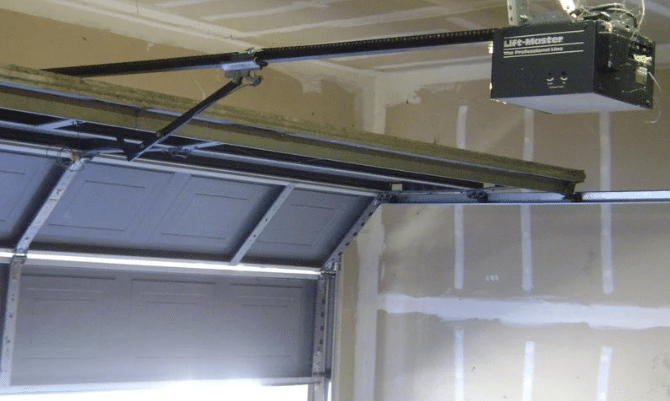
Most garage door slamming incidents start with a spring system failure, and once the counterbalance is lost, the excess load quickly shifts to other parts, triggering rapid wear.
Failure often spreads in this order:
- Spring tension drops, removing controlled resistance during closing.
- Lift cables lose synchronization as load shifts across the shaft.
- Rollers and hinges absorb shock, increasing friction and instability.
- Track brackets loosen from vibration and repeated impact.
- The opener strains under too much force while the door stays unbalanced.
Cascading damage occurs because the door’s counterbalance system no longer offsets its weight, raising strain across the entire garage door system and increasing the risk of costly repairs.
Safety Risks When a Garage Door Closes Too Fast
A garage door that closes too fast poses immediate safety and damage risks because its weight can move with uncontrolled force during closing and overwhelm normal stop-and-reverse protection.
Major risks associated with fast closing include:
- Serious injury risk from impact at the floor line or during door opening and closing transitions.
- Property damage to vehicles, stored items, and the door panels from sudden slamming.
- Pinch-point hazards at hinges and section joints as the door compresses unexpectedly.
- Loss of alignment in horizontal tracks and mounting brackets, which increases binding and instability.
- Escalation of garage door problems can lead to expensive repairs if the system keeps cycling.
Safety risks rise quickly because an unbalanced garage door system can drop without warning, turning a routine closing cycle into a high-force event that compromises smooth operation and puts anyone nearby at risk.
Professional Inspection Process for Slam-Related Failures
A professional inspection of a garage door that slams shut identifies the primary failure point and checks which lift parts were overloaded during the closing process.
Inspection usually covers:
- Balance testing to confirm counterbalance loss and uneven door movement
- Spring and coil checks to confirm tension loss or breakage
- Cable, drum, and bracket review to verify stable lift support
- Track and alignment check for smooth travel through horizontal tracks
- Opener settings and force settings verification to avoid too much force
- Full cycle testing to confirm controlled closing and safe function
Next-step responses and safety priorities after a sudden slam event are covered in our guide on What Should You Do If a Garage Door Slams Shut?, which explains what we review first and how we confirm the safest path forward.
Repair Scope and What the Average Cost May Depend On
The repair scope after a garage door slams shut depends on which lift components failed first and how much secondary strain spread through the garage door system during the drop.
Average cost may depend on factors such as:
- Spring replacement needs are based on the weight of your garage door and the required tension rating
- Cable or drum damage that affects the balance on the side of the door
- Roller, hinge, and bracket wear caused by repeated slamming
- Track alignment correction involving horizontal tracks and mounting points
- Door opener strain or limit verification tied to the opener’s force settings
- Door material, insulation level, and parts availability for modern garage doors
Underlying triggers that often determine how wide the repair scope becomes are explained in our blog on What Causes a Garage Door to Slam Shut in Richmond, TX?, which links common failure points to real-world stress conditions that lead to sudden drop events.
Why Richmond, TX Conditions Can Accelerate Key Part Wear
Local conditions can accelerate wear on lift hardware, increasing the likelihood that a garage door will slam shut in Richmond, TX.
Local contributing factors often include:
- Moisture exposure that accelerates rust on springs, cables, and brackets
- Temperature swings that affect coil tension inside the spring system
- High daily cycle counts shorten the lifespan of rollers and hinges
- Dust buildup that increases friction along the track and shaft contact points
- Storm vibration that shifts mounting brackets and affects alignment
Gradual environmental wear reduces the garage door’s ability to maintain smooth operation, raising the risk of sudden drop events during closing.
What to Expect After the Failure Is Identified
After the failed part is confirmed, service aims to restore controlled closing by correcting the root cause, rebalancing the door, and confirming stable movement through a full cycle.
What usually happens next includes:
- Replacing the failed part and restoring balanced lift support
- Checking cables, rollers, hinges, and brackets for slam-related strain
- Confirming track alignment to reduce friction and uneven door movement
- Verifying opener settings, including force settings and travel limits, to avoid too much force
- Running door opening and closing tests to confirm smooth operation
Final testing helps prevent repeat slamming, and garage door maintenance supports longer-lasting smooth operation.
Identify the Failed Parts Behind a Garage Door That Slams Shut
A garage door slams shut when the counterbalance control fails, often due to loss of spring tension, cable damage, bearing friction, bracket strain, or track alignment shifts. Prompt service helps reduce property damage, lower the risk of serious injury, and prevent costly repairs caused by repeated slamming and uneven door movement.
First Call Garage Doors helps homeowners in Richmond, TX restore smooth operation with professional garage door repair and complete safety checks. We confirm proper balance, opener settings, and force settings, so contact us or give us a call today to book service with a local technician.
Frequently Asked Questions
Is a slamming garage door more likely to be caused by springs or cables?
Yes, springs are the more common cause. Springs control the door’s weight and descent speed, while cables usually fail after spring tension is already compromised. Cable issues often show up as tilting or uneven door movement rather than an even, straight drop.
What does it mean if the door drops faster on one side than the other?
Uneven descent usually points to an imbalance in lift support. A cable can be slipping on a drum, a bracket may be strained, or one side may be carrying more of the door’s weight. Continued operation can worsen alignment and increase strain on rollers and hinges.
Can a garage door slam shut even if the opener seems to work fine?
Yes. The opener can run normally while the counterbalance system is failing, especially if the springs are losing tension gradually. The opener is not designed to control the full weight of the door, so a drop event can still happen even with a functioning motor.
How do I know if the problem is a broken spring or a track issue?
A garage door spring broken issue often causes a loud bang, a heavy lifting sensation, and a sudden loss of controlled closing. Track problems more often involve rubbing, binding, or visible alignment shifts along the rails. A professional inspection confirms the root cause without guessing.
Are older garage doors more likely to slam due to worn lift hardware?
Yes. Wear accumulates over time on springs, cables, bearings, rollers, and hinges, reducing smooth operation and increasing friction. Older systems also tend to have more loosened brackets and alignment drift that can contribute to slamming.
Does door insulation or door weight make slamming more dangerous?
Yes. Heavier doors carry more momentum during descent, increasing impact force at the floor line and raising the risk of serious injury. Extra weight also increases strain on springs and lift hardware, potentially expanding the scope of damage after a drop.
Can repeated slamming damage garage door panels or section seams?
Yes. Repeated impact can stress hinges, bend sections, and loosen fasteners that hold panels together. Damage often spreads into track alignment and roller wear, making the door more unstable over time.
How long can a door operate after a spring failure before more parts are damaged?
It depends. Continued cycling can quickly overload cables, rollers, hinges, and the opener, especially if the door is heavy or already misaligned. Early service helps reduce the chance of secondary damage and expensive repairs.
What signs suggest the failure is getting worse, even if the slamming is intermittent?
Increasing noise, faster drops, shaking during closing, and growing uneven door movement are common signs of escalation. Intermittent behavior often means tension or alignment is changing from cycle to cycle. A worsening pattern usually indicates more strain spreading through connected lift parts.