
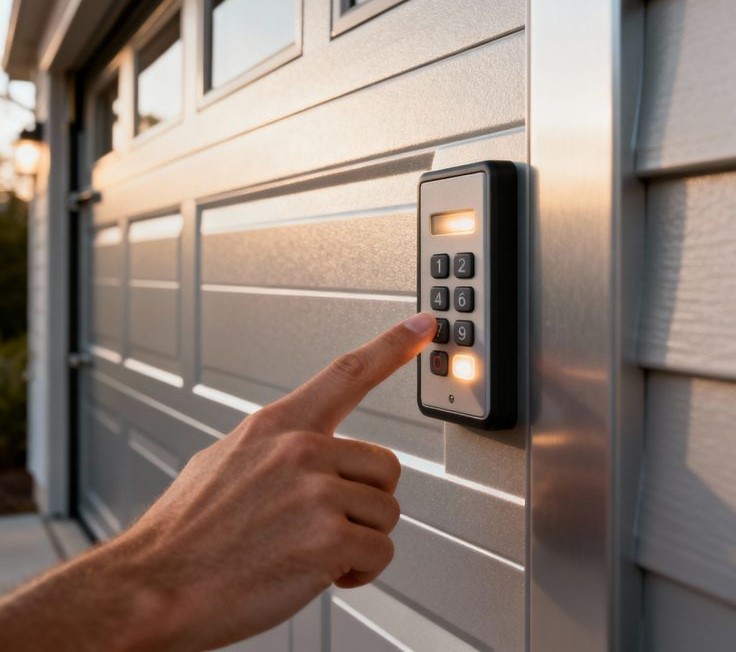
You walk up to your garage, punch in your code, and nothing happens. You try again. Still nothing. The keypad blinks at you like it has completely given up. Before calling a technician, here is what you need to know: your garage door keypad probably locked itself out on purpose. Most modern keypads are built with a security feature that shuts down after too many wrong PIN entries. It is not broken. It is doing its job.
As garage door professionals serving Richmond, TX and the greater Fort Bend County area, this is one of the most common service calls received, especially from homeowners who recently changed their PIN or from kids who punched in random numbers out of curiosity. This guide covers how keypad lockouts work, why they happen, which brands use them, and what steps to take when it happens to you.
7 Things Richmond, TX Homeowners Should Know About Garage Door Keypad Lockouts
1. Most Modern Keypads Have a Built-In Lockout Feature
If your home was built or upgraded within the last 10 to 15 years, your garage door keypad almost certainly has lockout protection. This is standard across the most popular brands found in Richmond and Fort Bend County homes:
- LiftMaster (extremely common in newer Richmond subdivisions)
- Chamberlain
- Genie
- Linear / Nortek
- Craftsman
Older keypads with chunky rubber buttons typically do not have this feature. But if yours is a slim, backlit unit with a modern look, expect a lockout system to be built in.
This feature is also referred to as keypad disable mode, entry lockout, or security lockout mode depending on the brand.
Curious about how well these built-in features actually hold up? Read “How Secure Are Modern Garage Door Keypads?“ for a deeper look at what today’s keypads can and cannot protect against.
2. How Many Failed Attempts Actually Trigger a Lockout?
The exact number varies by brand, but here is a general breakdown based on the most common garage door systems:
| Brand | Failed Attempts Before Lockout | Lockout Duration |
| LiftMaster / Chamberlain | 5 incorrect entries | 30 seconds to 10 minutes |
| Genie | 3 to 5 attempts | Varies by model |
| Linear | About 5 attempts | Varies by model |
| Generic / Builder-Grade | 3 attempts or none | Often requires reset |
For Richmond homeowners with LiftMaster systems, which dominate the area’s newer home builds, the threshold is typically 5 wrong entries. After that, the keypad either goes dark or blinks rapidly to signal it has locked out.
The critical thing to remember: do not keep trying random codes. Every failed attempt either extends the lockout timer or permanently disables the keypad until a manual reset is done.
Want to know what happens when someone deliberately tries to force their way in through a keypad? Check out “Can Garage Door Keypads Be Hacked?“ to understand the real risks and how modern systems respond to them.
3. This Security Feature Is Actually Protecting Your Home
It is easy to feel frustrated in the moment, but this lockout feature is genuinely important for home security.
Without a lockout system, someone could stand at your garage and try every possible 4-digit PIN combination. That is 10,000 possible codes. With enough patience and no lockout protection, an intruder could eventually find the right one.
With lockout protection active, after just 5 wrong attempts the keypad shuts down. On more advanced systems, repeated forced attempts will:
- Extend the lockout period each time someone tries again
- Send an alert through a connected smart home app (such as the myQ app for LiftMaster systems)
- Require a manual reset from inside the garage before the keypad works again
For homeowners in Richmond, TX, where residential neighborhoods have seen their share of garage break-in attempts, this is a real layer of protection worth appreciating.
If you are still on the fence about going wireless, the article “Are Wireless Garage Door Keypads Safe to Use?“ breaks down exactly what makes them a reliable and secure choice for most homes.
4. It Is Not Always About Wrong PINs
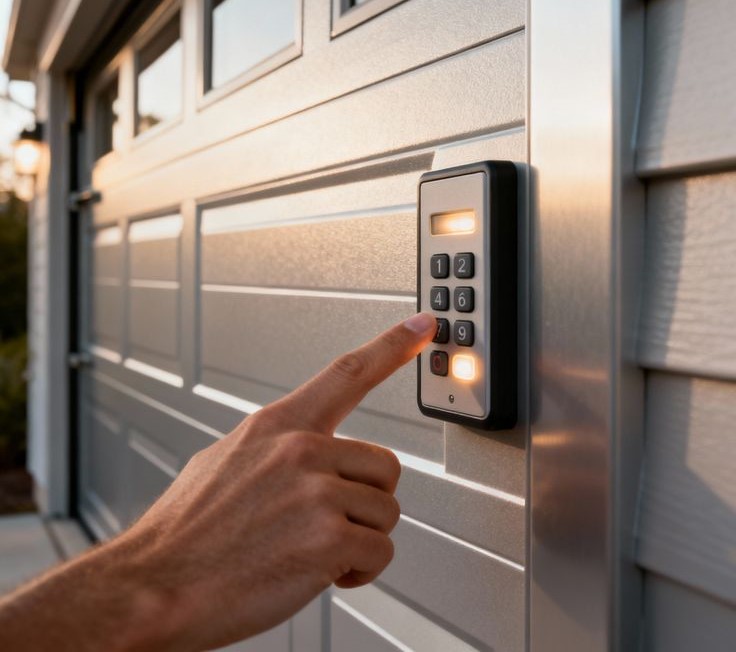
Here is something that surprises a lot of homeowners: a lockout is not always caused by failed PIN entries. Other common triggers include:
Dead or weak batteries
This is the number one cause of keypad issues in Richmond. Texas summers are brutal, and the heat drains batteries much faster than in cooler climates. A low-battery signal can look exactly like a lockout.
Signal interference
New metal shelving, Wi-Fi equipment, or appliances installed near the garage can block the signal between the keypad and the opener motor. The keypad appears frozen even though nothing is technically locked.
Power outages
Fort Bend County storms can cause power surges or outages that wipe a saved PIN from the keypad’s memory. The code is not wrong, it simply does not exist in the system anymore.
Dirty or worn buttons
In humid environments like Richmond, moisture and grime build up on keypad buttons. This can cause certain buttons to stick or register unintended inputs, which the system interprets as multiple failed attempts.
Rolling code sync issues
Some keypads use rolling code technology for added security. If the keypad and opener fall out of sync, the keypad will not respond until the two are re-paired.
5. How to Tell If It Is a True Lockout or Something Else
Run through this quick checklist before assuming the worst:
- Check the batteries first. Replace them with fresh AA or 9V batteries depending on the model. This single step resolves more than half of all keypad complaints.
- Look at the keypad light. A fast blink usually means lockout. A slow blink often means low battery. No light at all typically points to dead batteries or a wiring issue.
- Test the wall button inside. If the wall-mounted button inside the garage opens the door without any problem, the issue is isolated to the keypad, not the opener itself.
- Check for recent storms or outages. If Richmond had a power interruption recently, the PIN may need to be re-programmed into the system from scratch.
- Try a secondary PIN if one exists. Many systems support multiple access codes. If one code works and another does not, the issue is likely specific to that one PIN entry.
6. Steps to Reset or Recover From a Keypad Lockout
The following steps cover the most common recovery methods. Keep in mind that every brand and model is slightly different, and some resets require accessing the opener motor unit inside the garage.
- Step 1: Wait it out. Most lockouts are temporary. Wait 10 to 30 minutes and then try the correct PIN again. Do not press any buttons during the wait, as this can reset the lockout timer and start the countdown over.
- Step 2: Replace the batteries. Even if the keypad light is still on, low batteries can cause inconsistent behavior. Fresh batteries are always the first fix to try.
- Step 3: Use the Learn button on the opener. Most garage door openers have a Learn button near the light on the motor unit. Pressing this allows old codes to be deleted and new ones to be programmed. This effectively resets a keypad stuck in lockout mode.
- Step 4: Clear keypad memory and re-program. Some keypads have a reset sequence that involves holding specific button combinations. The exact process depends on the brand and model. Check the manual or look up the model number online.
- Step 5: Call a professional. If none of the above works, a local garage door technician is the right call. In Richmond, TX, a diagnostic service visit for keypad issues typically runs an average cost depending on what is needed. It is usually a fast fix once a professional is on-site.
Attempting a full opener reprogramming without experience is not recommended. Incorrect reprogramming can cause a complete lockout or create security vulnerabilities in the system.
7. How to Prevent Keypad Lockouts From Happening Again
Prevention is always the smarter path. Here are practical tips from garage door professionals who work with Richmond homeowners regularly:
- Replace batteries every 6 to 12 months. Schedule it around hurricane season prep or a seasonal home maintenance checklist. Do not wait for the keypad to fail first.
- Pick a PIN that is memorable but not obvious. Avoid using birthdays, house numbers, or repeated digits. A 6-digit random code stored somewhere secure (not on the garage itself) is a strong balance of convenience and safety.
- Educate every household member about the lockout feature. Children especially tend to punch buttons when they forget the code. Make sure everyone knows to stop after 2 to 3 failed tries and get help rather than keep guessing.
- Connect to a smart home app if the system supports it. LiftMaster’s myQ app lets Richmond homeowners monitor garage activity, receive lockout alerts, and open the door remotely. This is especially helpful for families with multiple drivers or homeowners who travel frequently.
- Schedule annual garage door maintenance. A yearly checkup by a local technician covers springs, tracks, sensors, and keypad function. It is the most reliable way to catch small problems before they turn into expensive repairs. And if the system is aging beyond repair, it may also be the right time to consider a new garage door replacement to ensure the entire setup is working safely and efficiently.
- Account for Richmond’s heat and humidity. Summer conditions in Fort Bend County can shorten battery life, cause corrosion on keypad contacts, and affect overall sensitivity. If the keypad feels sluggish during peak summer months, start with battery replacement and a gentle cleaning of the button surface.
What To Do When Your Garage Door Keypad Will Not Work in Richmond, TX
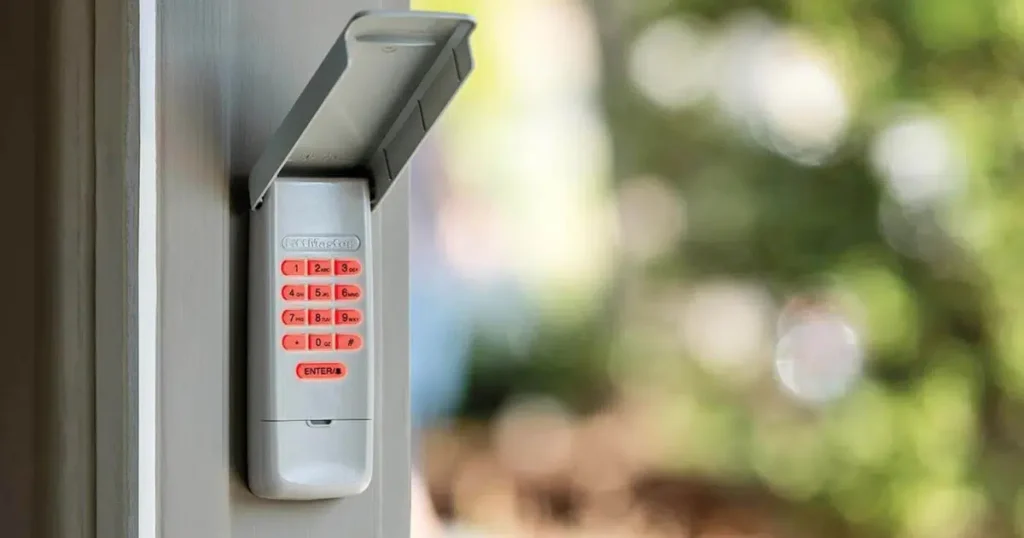
A locked-out garage door keypad is one of the most common, and most misunderstood, garage door issues homeowners in Richmond, TX encounter. In most cases, fresh batteries or a short reset process is all it takes to get back on track.
If the problem keeps coming back or the keypad will not reset, that is the right time to bring in a local garage door professional. The lockout feature exists to protect the home. Working with it rather than against it keeps the system running the way it was designed.
Get Trusted Garage Door Help Right Here in Richmond, TX
When a keypad lockout goes beyond a simple battery swap or reset, it is time to call in the pros. First Call Garage Doors proudly serves Richmond, TX and Fort Bend County with reliable, no-nonsense garage door service that homeowners trust. Do not let a small lockout turn into a bigger headache. Contact us today or give us a call and get your garage door back on track fast.
Frequently Asked Questions
How long does a garage door keypad stay locked out?
Most lockouts last between 30 seconds and 10 minutes. Some models require a manual reset using the Learn button on the opener unit before the keypad will accept input again. For a broader look at garage door security ratings and comparisons, visit Security.
Can the door still be opened during a keypad lockout?
Yes. The wall button inside the garage and any paired remote controls will continue to work normally during a keypad lockout. Only the keypad itself is disabled.
Why is my garage door keypad blinking but not working?
A blinking keypad most often signals low batteries, a lockout from failed attempts, or a sync issue with the opener. Replacing the batteries is always the recommended first step.
How do I reset my garage door keypad PIN?
Press the Learn button on the opener motor unit, then enter a new PIN on the keypad and press Enter or the pound sign to confirm. The exact steps vary by brand, so checking the model manual is recommended.
Can someone hack a garage door keypad by guessing codes?
On modern systems with lockout protection, this is extremely difficult. After 5 wrong attempts, the keypad disables itself, making brute force entry practically impossible without triggering a lockout alert.
Does a power outage affect my garage door keypad PIN?
It can. Some systems lose their programmed codes during a power surge or extended outage. If the keypad stopped working after a storm in Richmond, re-programming the PIN is the likely fix.
Why does my keypad work sometimes but not others?
Intermittent keypad function is typically caused by weak batteries, signal interference, or worn keypad buttons. In Richmond's humidity, corrosion on internal contacts is also a common cause.
How many PINs can a garage door keypad store?
Most modern keypads support between 2 and 10 unique PINs depending on the model. LiftMaster and Chamberlain units typically allow at least 3 to 4 access codes.
When should a garage door keypad be replaced instead of repaired?
If the keypad is more than 10 years old, has physical damage, or continues failing after battery replacement and resets, replacement is usually more cost-effective than repeated repairs. A garage door technician can advise on compatible replacement options.