
Garage door remote does not last forever, and wear from daily use, heat exposure, and aging parts are the biggest reasons they start to fail. Knowing the signs of a worn-out remote helps you catch the problem early and avoid a full loss of access to your garage.
These signs are easy to overlook until the remote stops working completely. This guide identifies each warning sign so you can make an informed decision about when to replace your new garage door remote control.
What Causes a Garage Door Remote Control to Stop Working?
A garage door remote control goes through a lot of wear over its lifetime, and understanding the root causes of failure helps you recognize warning signs before the problem completely affects your access to the garage.
Several factors push a remote toward failure faster than expected:
- Daily use gradually weakens the internal transmitter and reduces its ability to send a signal to the opener
- Heat and humidity break down internal components over time and cause the remote to perform inconsistently
- Physical damage from drops and impacts cracks the casing and disrupts the circuit board inside
- Battery corrosion eats away at the contact points and prevents the battery from powering the remote
- LED lights and nearby electronics interfere with the radio frequency the remote uses to communicate with the opener
- Outdated technology leaves older remotes incompatible with modern garage door opener systems
To understand how these causes manifest as real problems in your system, read our guide on Why Is My Garage Door Remote Control Not Working?, which covers the most common issues homeowners run into before the remote completely stops working.
Signs That You Need a New Garage Door Remote Control
Inconsistent or No Response from the Remote
Frequent signal failure is one of the earliest and most telling signs that a garage door remote control is reaching the end of its usable life.
Watch for these patterns:
- Multiple button presses needed before the opener reacts
- The door responds one day and fails the next without any changes made
- The opener light flashes, but the door does not move
- Remote work works at certain angles but not others
- The wall button works normally, while the remote produces no response
Replacing the remote restores consistent communication between the remote and the garage door opener.
Reduced Range and Weak Signal
Needing to stand directly in front of the garage just to trigger the opener is a strong indicator that the remote’s transmitter is weakening.
Look out for these behaviors:
- The signal only reaches the opener from a few feet away
- Other remotes on the same opener work fine from a distance
- Fresh remote batteries produce no improvement in range
- Response becomes slower the farther away you stand
- Signal strength drops noticeably compared to when the remote was new
Weak signal output that persists after a battery change points directly to internal transmitter failure inside the remote.
Broken, Worn, or Damaged Physical Components
Physical wear on the remote casing and buttons is a clear sign that the unit can no longer perform as designed.
Here are the most visible warning signs:
- Buttons feel mushy, sticky, or no longer click when pressed
- The casing is cracked or broken and exposes the internal components
- The battery compartment door is missing or no longer stays closed
- Button labels are so worn that they are no longer readable
- Visible corrosion or rust appears on the battery contacts inside
Physical damage that reaches beyond the remote often points to a larger issue that a professional garage door repair provider can properly assess and fix.
Frequent Battery Failure Even After Replacement
Running through batteries every few weeks is a sign of an internal fault in the remote, not a problem with the batteries themselves.
Pay attention to these signs:
- New batteries lose their charge within days of being installed
- Remote works briefly after a battery change, but fails again quickly
- Battery contacts inside the remote look corroded or discolored
- Multiple battery brands have been tried with the same result
- Remote feels warm to the touch even when sitting idle
Persistent battery drain despite using fresh batteries confirms an internal fault, and replacement is the only way to resolve it.
Lack of Rolling Code Technology and Security Features
Older remotes that rely on fixed codes leave your garage vulnerable to signal interception by anyone with a code-grabbing device.
Watch for these indicators:
- Remote is more than ten years old and lacks modern security features
- Opener does not support rolling code or Security+ technology
- Suspicious activity has been noticed around the garage entry point
- Remote information shows no mention of encrypted or rotating codes
- Upgrading the opener reveals that the old remote is no longer compatible
Switching to a remote with rolling code technology generates a brand new access code with every single button press and eliminates the risk of signal interception.
Signal Interference from LED Lights or Electronic Devices
Radio-frequency interference from common household electronics is a growing cause of garage door remote failure that most homeowners never consider.
Notice if any of these match your situation:
- The remote stops working after an LED bulb was installed in the opener
- Failure happens more often when certain nearby devices are turned on
- Neighbors with the same opener brand experience no issues
- Remote work works better outdoors than inside the garage
- Turning off specific electronics temporarily improves remote performance
Identifying and removing the source of interference restores the remote’s signal, but if the remote remains affected after the source is removed, it needs to be replaced.
Already Tried to Reset Garage Door Remote but Nothing Changed
Going through the full reset process without any improvement is one of the strongest signs that the remote itself is the source of the problem.
Here are the signs the reset did not work:
- Remote fails to pair with the opener after multiple reset attempts
- Opener responds to the wall button but not the remote after resetting
- Reset completes, but the remote malfunctions again within days
- The learn button on the opener shows no response during pairing
- No reset method has produced a lasting result
To confirm whether the remote or the opener is the problem, read our guide on How to Reset Your Garage Door Remote Control, which walks you through every reset method and helps you determine when resetting is no longer enough.
What to Check Before You Replace Your Remote
Running through a few basic checks before buying a new garage door remote control can save you time and money by ruling out simpler problems first.
Check these before making any purchase:
- Inspect the battery contacts for corrosion and install a fresh set of batteries
- Confirm that the wall button and control panel are working normally
- Review the opener manual and verify the garage door remote programming steps
- Press the learn button to see if the remote reconnects to the opener
- Turn off nearby electronics and LED lights to rule out signal interference
- Confirm the remote is still compatible with your opener model
If none of these checks resolve the problem, the new remote control for garage door itself is the issue, and a new garage door opener replacement may be worth considering if the opener is too old to support a modern remote.
How Much Does It Cost to Replace a Garage Door Remote?
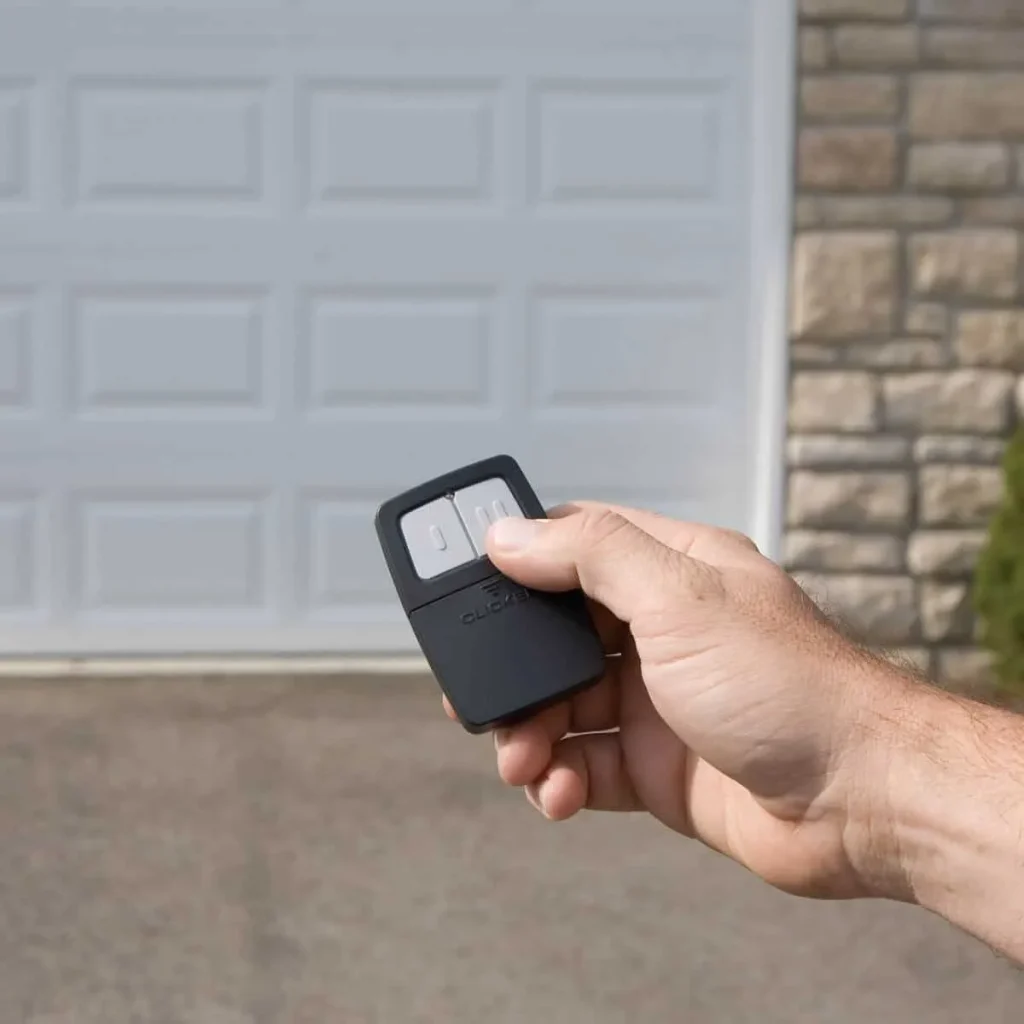
Knowing what drives the cost of a replacement remote helps you set a realistic budget and avoid overpaying for something your opener may not even support.
Several factors influence how much you will spend on a replacement:
- Remote type plays a big role, as basic single-button remotes cost less than keypads or smart controllers
- Brand compatibility affects cost since brand-specific remotes for LiftMaster and similar brands cost more than universal options
- Older opener models that require hard-to-find remotes tend to drive the price up
- Professional programming and installation add to the overall service cost
- Purchasing through a certified garage door repair provider may bundle programming into the total price
Consulting a trusted garage door opener repair provider before purchasing ensures you get the right remote for your opener without overspending.
How to Sync and Program a New Garage Door Remote After Replacement
Syncing and programming a new garage door remote control after replacement requires following the correct pairing sequence for your specific opener model.
Here is what the process generally involves:
- Press the learn button on the opener to activate pairing mode
- Hold the button on the new remote until the opener light flashes or clicks
- Test the remote from various distances to confirm the connection is stable
- Program additional remotes or keypads following the same pairing sequence
- Check your opener manual for model-specific steps if the remote does not sync on the first attempt
To follow the exact pairing steps for every major opener brand, read our guide on How to Program a Garage Door Remote Control, which walks you through each method so your new remote syncs correctly from the start.
Act on These Signs Before Your Garage Door Remote Fails You Completely
Knowing the signs you need a new garage door remote control puts you in the best position to act before a minor issue turns into a complete loss of access. An outdated or failing remote also puts your home at risk, making it important to address the problem as soon as the warning signs appear.
First Call Garage Doors has helped homeowners across Richmond, TX, quickly and hassle-free restore their garage door remote control systems to full working order. Contact us or give us a call today, and let our team help you identify the signs your garage door remote control needs to be replaced before it completely fails.
Frequently Asked Questions
How do I know if my garage door remote is the problem and not the opener itself?
Testing the wall button is the quickest way to isolate whether the issue is with the remote or the opener itself. If the opener responds normally to the wall button but produces no reaction to the remote, the remote is the source of the problem, and replacement is the next step.
Can extreme heat or cold shorten the lifespan of a garage door remote?
Yes, it can. Extreme temperatures cause internal components to expand and contract repeatedly, weakening the circuit board and battery contacts over time. Storing the remote away from direct heat and humidity helps extend its lifespan.
Can a garage door remote expire or become obsolete over time?
Yes, it can. Manufacturers eventually stop producing replacement parts and updates for older remote models, making them incompatible with newer opener systems. Knowing how to program garage door remote systems after upgrading to a newer model ensures a smooth transition without connectivity issues.
Can a garage door remote signal weaken without the batteries dying?
Yes, it can. The internal transmitter can lose its ability to send a strong signal even when the batteries still have power remaining. Replacing the batteries and seeing no improvement in signal strength are among the clearest signs the remote needs to be replaced.
What happens if I ignore the signs of a failing garage door remote for too long?
A failing remote that goes unaddressed will eventually stop working completely and leave you without access to your garage. Addressing the signs early avoids the inconvenience of a full remote failure at the worst possible time.
Can a garage door remote from one brand control an opener from a different brand?
Yes, but only if the remote is specifically designed as a universal model and the opener's frequency and technology are supported. Using the learn button garage door remote pairing process confirms whether a cross-brand remote can successfully connect to your existing opener.
Does the age of my garage door opener affect which replacement remote I can use?
Yes, it does. Older opener models are less compatible with modern remotes, and some may only support brand-specific replacements. Confirming your opener's age and model before purchasing a replacement saves you from buying an incompatible remote.
Can a cracked remote casing affect its ability to send a signal?
Yes, it can. A cracked casing exposes the internal circuit board to moisture, dust, and physical damage, disrupting the remote's ability to transmit a signal. Once the casing is compromised, replacing the remote is the most practical solution.
Is there a way to test a garage door remote before buying a replacement?
Yes, there is. Standing close to the opener and pressing the remote button reveals whether the opener responds at close range, helping confirm whether the transmitter is still functioning. To sync garage door remote to opener systems after confirming the old remote has failed, follow the pairing sequence outlined in your opener manual.