
Your garage door opener plays a quiet but constant role in your routine, making daily access feel effortless and secure with a simple press of a button. Noises like grinding or squealing usually get your attention fast, because they signal that something is off before the situation gets worse.
What’s easier to miss are the issues that develop without sound, such as safety features that stop responding properly, inconsistent operation that comes and goes, or security weaknesses that leave your home exposed. These silent failures can erode your peace of mind and create openings for problems you never saw coming, especially when they go unnoticed for too long. That’s why it matters to recognize the full range of garage door opener concerns, loud or quiet, and to rely on timely garage door services when something feels off, so reliable performance stays part of your everyday life.
Garage Door Opener Repair Problems That Go Beyond Noise
A noisy garage door is hard to ignore because sound is an obvious signal that something is wrong. What often gets overlooked are the quieter issues that still call for garage door opener service, especially when parts such as the logic board, safety sensors, or internal mechanisms start to fail in subtle ways. When those components slip out of sync, the opener can behave unpredictably without making a fuss, which is why a door may seem fine at first even though its safety and security features are gradually being compromised.
Once those small signs are brushed aside, they rarely stay small for long. What looks like a minor inconvenience today can grow into a more serious garage door opener repair later, since wear inside the system tends to stay hidden behind its sturdy exterior until performance drops enough to notice. Even when a garage door opener installation is done correctly, the opener still changes with years of daily cycling, so recognizing early shifts matters. With that in mind, the next sections break down the first warnings homeowners tend to catch and the performance changes that usually point to professional attention.
For a deeper look at why expert help pays off, check out “Protect Your Garage Door Opener: The Benefits of Calling a Trusted Expert.”
Garage Door Opener Signs Richmond Homeowners Often Notice First
In many Richmond homes, the earliest warning doesn’t come from noise but from delayed response. You might press the remote and wait longer than usual, or find yourself clicking twice before the door reacts, which often indicates something deeper than a simple battery issue. These early hiccups are easy to dismiss, yet they frequently show up when sensors drift out of alignment, gears begin to wear, or the opener’s control system starts to struggle under normal use.
Across both chain and belt setups, the pattern is similar when internal strain builds over time. The door may begin to feel less dependable, not because one single part fails all at once, but because several components stop working smoothly together. Common changes that tend to show up first include:
- The door is moving more slowly than it used to
- The opener reverses direction when nothing seems to be in the way
- The wall button or remote is responding inconsistently
- The chain or belt appears looser than before
When signs like these appear, they usually mean the opener needs a closer professional evaluation. Catching them early helps prevent the system from reaching the point where it stops working altogether.
Garage Door Opener Performance Shifts That Lead to Repair Needs
Sometimes a garage door opener can develop a serious issue without getting any louder, which makes the problem easy to miss until performance clearly changes. You might hear the motor run while the door barely moves or doesn’t move at all, which often shows a break in the connection between the motor and the drive system, regardless of whether the opener uses a chain or a belt. Because the sound stays familiar, the malfunction can feel confusing at first, even though the opener is already signaling that something inside is failing.
These shifts can come from several internal causes, such as stripped gears, control board failure, or damaged electronics after electrical stress. In some cases, smart-home features stop syncing properly, not because the network is the problem, but because the opener itself is no longer processing commands consistently. Watch for changes like these, since they commonly indicate the need for garage door opener repair:
- The door stops before it fully opens or closes
- The motor hums while the door stays still
- the door touching the floor and immediately reversing
- The opener is working intermittently rather than every time
Even when the drive type or motor strength hasn’t changed, these symptoms usually point to an internal breakdown. Once you notice performance acting this way, it’s a sign the opener isn’t coordinating its parts correctly anymore, which is when professional service or a new garage door installation becomes the safest next step.
Garage Door Opener Service Issues That Sound Alone Can’t Explain
Garage door openers have become standard in most homes, yet the problems people run into aren’t always tied to loud mechanical noise. Modern systems rely on smart features, battery backup, and layered security functions that can fail quietly, leaving the door operating but the protection or convenience you depend on slipping out of place. When an app won’t connect, won’t confirm whether the door is closed, or stops sending status updates, the motor may be working just fine even as the opener’s internal electronics struggle to keep up.
Because technology-driven failures behave differently from mechanical ones, they often require a different kind of garage door opener service. What matters is not only that the door moves, but that every part of the opener’s system responds correctly, especially as new features add new points where performance can quietly degrade. Understanding these less obvious issues makes it easier to recognize when the opener needs professional attention, since silence doesn’t always mean everything is working as it should.
For more on the security side of these failures, read “Garage Door Opener Issues That Can Put Home Security at Risk.”
Hidden Garage Door Opener Failures Affecting Daily Operation
A smart garage door opener can streamline daily routines until the electronics inside begin to falter in ways that don’t announce themselves with noise. You may notice the unit dropping its Wi-Fi connection, refusing to sync with a home system, or failing to support access features you normally rely on, which usually points to trouble in the logic board or software rather than in the moving parts. When that internal communication breaks down, the way you interact with your garage can change fast, even though the door still looks and sounds normal.
These failures can appear in any drive type, because they’re tied to the opener’s control core instead of its mechanical strength. If the system can’t communicate reliably, you lose visibility and control, which may leave you guessing about door status or access behavior at the worst times. Common signs of hidden electronic strain include:
- intermittent or complete loss of smart-home connection
- remotes that stop pairing or responding consistently
- difficulty adding new remotes or keypads
- access features that work unpredictably or fail outright
When patterns like these show up, they usually indicate an internal fault that needs to be diagnosed at the system level, since the issue is rarely solved by surface adjustments.
Garage Door Opener Safety Concerns Behind Unusual Behavior
When a garage door opener starts behaving strangely, safety is often the real issue beneath the surface. The photo-eye sensors near the bottom of the tracks are designed to prevent the door from closing on people, pets, or objects, yet the system can lose that protection when sensors drift out of alignment or stop functioning correctly. If the door doesn’t reverse when something crosses the beam, or reverses randomly even when the opening is clear, the opener is signaling that its fail-safe response is no longer reliable.
Security can be affected in similar quiet ways, because openers depend on rolling access codes and stable control logic to prevent unauthorized entry. When that digital protection stops updating or syncing properly, the door may become easier to compromise, even if everything seems fine at a glance. Warning signs tied to safety or security issues include:
- The door fails to reverse when the sensor beam is interrupted
- Repeated blinking from the opener indicates a sensor fault
- The door reverses partway down with no visible obstruction
- keypad codes that won’t set, change, or hold consistently
At that point, the concern goes beyond convenience, because the system is no longer delivering the protection it’s meant to provide. Having the opener assessed professionally through the proper garage door repair restores safe operation and dependable security, which is the standard you want each time the door moves.
Garage Door Opener Components Involved in Repair or Installation
Whether you are dealing with a garage door opener repair or planning a new garage door opener installation, the system has a handful of core parts that determine how reliably the door moves. At the center is the motor, paired with a drive setup such as a belt, a chain, or a direct drive style, all of which work as a single unit to lift and lower the door with controlled force. Because these parts are linked, a problem in just one area can throw off the entire operation, even when the rest of the opener seems fine.
Beyond the motor and drive assembly, the opener depends on electronics that guide every movement, including safety sensors, control boards, and signal receivers that translate commands into action. When these pieces are aligned and communicating properly, the door opens smoothly and closes with the safety checks you expect, which matters even more in newer systems that connect to home networks and rely on stable digital control. With that foundation in mind, it helps to look more closely at how the motor, drive system, and controls each shape performance over time.
If you want to stay ahead of hidden wear, take a look at “Garage Door Opener Checkups That Help Prevent Bigger Problems.”
How Garage Door Opener Motors and Drive Systems Affect Movement
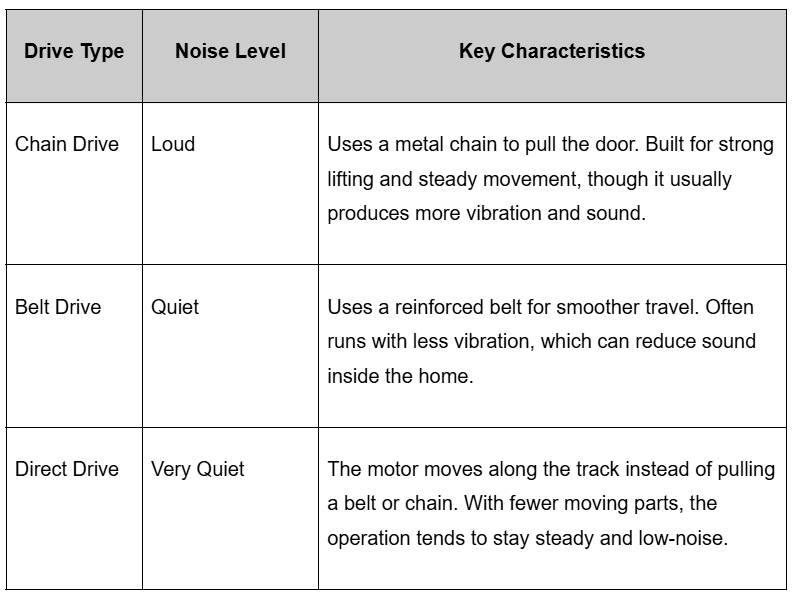
The motor and drive system are the engine and drivetrain of a garage door opener, since they decide how power is delivered and how smoothly the door travels along its path. Belt-driven systems tend to move with a quieter, more even pull, while chain-driven setups use a metal link track that is known for strength but can transmit more vibration through the structure. Direct drive designs operate differently by moving the motor along the rail, which reduces the number of moving parts involved in the lift and often changes the feel of the door’s motion.
Because each drive type distributes force in its own way, the pairing of motor and mechanism shapes long-term reliability as much as day-to-day performance. When the motor begins to strain, or the drive assembly starts wearing unevenly, the door may hesitate, jerk, or lose consistency, even if the opener still turns on and the garage door remote control continues to respond in ways that seem normal at first.
A quick comparison of the three common drive styles makes it easier to see how they differ in operation and sound.
Garage Door Opener Sensors and Controls That Influence Reliability
A garage door opener is only as dependable as the sensors and controls that guide it, because the electronics decide when the motor should run, stop, or reverse. Safety sensors at the base of the tracks are designed to prevent the door from closing on what it shouldn’t, so when they misread the doorway or lose alignment, the opener may refuse to close or reverse unexpectedly as a built-in precaution. That behavior can look like a mechanical failure at first, even though the root cause sits in the system’s protective circuitry.
Control features shape reliability in a similar way, since remotes, wall panels, and connected access functions rely on steady communication with the opener’s receiver and internal board. When signals weaken or processing becomes inconsistent, everyday operation starts to feel uncertain, even if the motor itself hasn’t changed. Key controls and support components that influence performance include:
- Remote controls that depend on stable signal reception
- Wall-mounted control panels that send direct operating commands
- Safety sensor systems that trigger reversal when the opening isn’t clear
- Built-in access controls that manage entry and prevent unauthorized use
- Connected monitoring features that report door status and receive commands
When these controls begin to fail, the symptoms can mirror hardware trouble, because the opener may respond late, partly, or only some of the time, which is often when garage door opener repair becomes necessary. Keeping all of these parts working in sync is essential for smooth operation, since the system’s strength means little if its sensors and control pathway can’t reliably direct each movement.
When Garage Door Opener Repair Points to New Garage Door Opener Replacement
There comes a point when repeated garage door opener repair stops being the sensible path, especially when the unit has reached an age where reliability naturally drops, and key safety updates are no longer part of its design. If an opener is already in that late stage of its lifespan, or if it no longer supports the safety and security expectations of a modern home, replacement becomes the more stable option because the system is no longer operating with the consistency it once had.
Choosing a new garage door opener replacement also gives you room to match today’s needs, whether that means quieter operation, stronger security, or smoother integration with the way your household functions now. Even the best openers wear down with time, so starting fresh can restore confidence in daily performance when aging components have begun to limit what repairs can realistically solve, especially after repeated garage door service visits. With that context, it helps to look at the difference between continuing repairs and moving forward with replacement, particularly for homes in Richmond.
Garage Door Opener Repair vs. New Garage Door Opener Replacement in Richmond
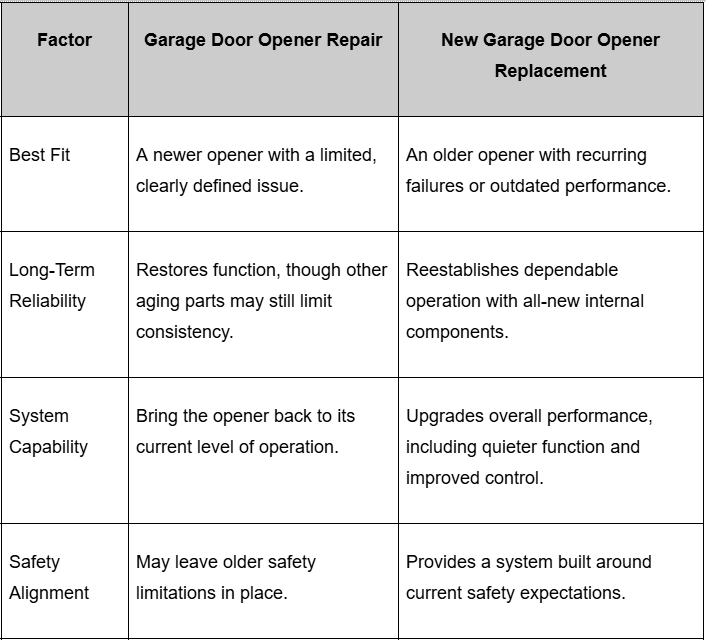
In Richmond, the decision usually comes down to how your current opener is performing over time, rather than any single isolated issue. Repair can make sense when the opener is still relatively recent, and the problem is contained, because restoring one component may bring the system back to normal without lingering concerns. Replacement tends to be the clearer direction when the opener is older, when breakdowns are becoming a pattern, or when the system has fallen behind on modern safety and security capabilities, since those gaps are not always solved through part-by-part fixes.
A replacement also resets the entire operating system, which matters when you want dependable movement and updated functionality across every cycle of the door. Instead of chasing symptoms that keep returning, you gain a complete unit designed for current standards and everyday expectations, making age, reliability, and safety alignment the main factors homeowners weigh, as explained by Wikipedia.
Here is a simple comparison to make that choice easier to see at a glance.
Richmond Conditions That Can Trigger Garage Door Opener Installation Needs
In Richmond, Texas, it’s common to need a new garage door opener sooner than expected because the local heat and heavy humidity place extra strain on both electronics and moving parts. Moisture can corrode contacts and stress control boards over time, while prolonged high temperatures push internal components to run hotter and wear out faster, which is why openers here may require service earlier than they would in milder climates. At the same time, many Richmond homes use heavier garage doors made from wood or thick insulated steel, so the motor has to work harder with every cycle, especially in garages with higher ceilings where the opener setup needs to match the space and lift demands. When an older unit struggles to raise a heavy door, when electronics keep failing under weather pressure, when the garage layout calls for a wall-mount style system, or when storm-related outages make backup operation more important, replacement and a fresh garage door opener installation often become the more reliable path.
Understanding garage door opener repair goes well beyond reacting to odd sounds, since it helps you notice early warning signs and subtle shifts in performance before a small issue turns into a real disruption. When something feels off, keeping safety as the priority matters because timely attention protects both the system’s reliability and the people who use it every day, especially in a place like Richmond, where local conditions can shape how quickly problems develop. If you’re unsure whether a repair still makes sense or a new opener is the better fit, getting informed guidance can clear the guesswork, so your garage door continues to support your home with the steady security and peace of mind you expect.
When you’re ready to have your system looked at by a team that understands how openers behave in Richmond homes, First Call Garage Doors is a dependable place to turn for clear answers and careful service. Our technicians focus on finding the real cause behind performance changes, not just the obvious symptoms, so you can feel confident in what happens next. Contact us today or give us a call and schedule a professional evaluation to keep your garage door opener working safely and smoothly.
Frequently Asked Questions
Is there a garage door opener option quiet enough for attached homes in Richmond, Texas?
Yes, quieter garage door opener systems are available and are often preferred for attached homes, because they reduce vibration and operating sound that can travel into living areas. When the drive mechanism is designed for smoother motion, noise drops noticeably, which matters most when garages share walls or sit directly below bedrooms.
What recurring issues most often lead to repeated garage door opener repair calls?
Repeated garage door opener repair often traces back to misreading safety sensors, worn internal gears, or control board problems that interrupt consistent operation. When those parts begin failing in cycles, the opener may work intermittently, reverse unexpectedly, or refuse to close, especially as age and daily strain build up inside the unit.
What can cause a garage door opener to fail without noise and still require garage door opener service?
A garage door opener can fail silently when electronics stop communicating correctly, such as the control board, receiver, or connected functions that process commands. In those cases, the motor may still be intact, yet the system won’t respond reliably, because the issue lives in the circuitry rather than in the moving hardware.
Why would a garage door opener open halfway, reverse, and signal garage door opener repair?
When a garage door opener starts moving and then reverses, it usually means the system is detecting resistance or an incorrect travel setting, even if nothing is visibly blocking the door. This behavior is often tied to safety sensing or force calibration problems, which is why the opener backs off mid-cycle when it believes movement isn’t safe, as also outlined by NACHI.
What does it mean when the garage door opener runs but the door won’t move, even after service?
If the garage door opener motor runs but the door does not move, the fault is usually in the drive connection between the motor and the door. When internal gears strip or the trolley loses engagement, the opener can sound normal while failing to transfer power, which explains why the motor operates without door movement.
Can a garage door opener problem affect door balance or alignment and increase repair needs over time?
Yes, a malfunctioning garage door opener can contribute to balance or alignment problems over time, especially when uneven pulling or jerky movement repeatedly stresses one side of the door. As that strain builds, rollers, tracks, and panels can wear unevenly, which makes future garage door opener repair more frequent.
How do safety sensors influence garage door opener performance when repair issues appear?
Safety sensors directly control whether the door is allowed to close, so when they misalign or fail, the opener often refuses to shut or reverses mid-motion. Since the system is designed to prioritize protection, performance becomes unreliable when sensors can’t confirm a clear path.
How do Richmond’s heat and humidity contribute to garage door opener repair or earlier service needs?
Richmond’s heat and humidity accelerate wear inside a garage door opener, because high temperatures strain electronics while moisture encourages corrosion on contacts and boards. With both pressures working together, components tend to fail earlier, which is why garage door opener service becomes necessary sooner than in milder climates.
When does garage door opener repair become less practical than new garage door opener replacement or installation?
Garage door opener repair becomes less practical when the unit is older, breaks down repeatedly, or no longer meets current safety and performance expectations. Once repairs stop restoring dependable operation, replacement and a fresh garage door opener installation usually make more sense, because the system has reached a stage where internal decline outweighs continued fixes.