
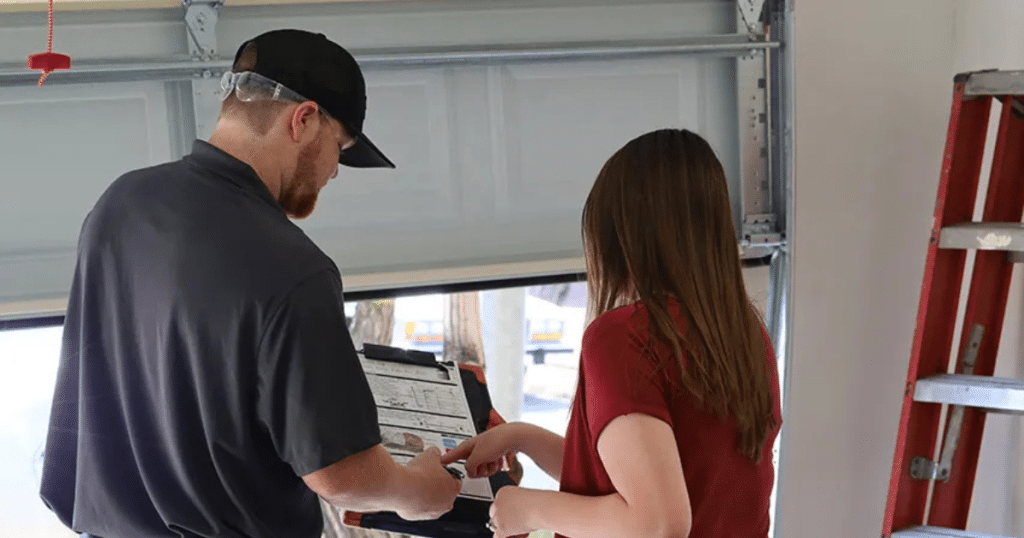
Garage door replacement often appears straightforward on the surface, yet the process involves multiple stages that influence safety, reliability, and long-term system performance. Understanding what occurs before, during, and after replacement helps set realistic expectations and highlights why professional evaluation is central to successful outcomes.
Each phase of the garage door replacement process addresses more than visual improvement, focusing instead on alignment, balance, structural compatibility, and coordinated system behavior. Awareness of these steps clarifies how replacement supports consistent operation rather than introducing new variables or ongoing adjustment needs.
Initial Assessment and System Evaluation
The replacement process begins with a careful assessment of the existing garage door system, including its structural conditions, mechanical components, and surrounding support elements. This stage establishes whether the opening, framing, and hardware can support the new door without modification.
Professional evaluation ensures that replacement improves overall system reliability rather than transferring existing issues into a new installation.
Find out whether garage door replacement is the right move when dealing with an aging or damaged door that no longer performs reliably by reading: Is Garage Door Replacement the Right Choice for an Aging or Damaged Door?
Key Elements Reviewed During Initial Assessment
- Measurement of the door opening and surrounding framing
- Evaluation of wall integrity and mounting surfaces
- Assessment of track configuration and spacing
- Review of existing opener capacity and compatibility
- Identification of alignment or balance concerns
- Inspection of wear patterns across supporting hardware
Assessment identifies conditions that influence installation quality and future performance. Accurate measurements and compatibility checks reduce the risk of alignment issues or uneven movement after replacement.
Residential garage door replacement benefits from this stage by ensuring that the structure and mechanics support predictable operation.
Learn the clear signs that signal when repairs are no longer enough, and garage door replacement should be considered by reading: What Signs Indicate It’s Time to Consider Garage Door Replacement?
Determining System Compatibility and Requirements
- Matching door weight to opener capability
- Confirming track and hardware compatibility
- Identifying necessary reinforcement or adjustments
- Reviewing insulation and material options
- Ensuring safety system alignment with modern standards
- Planning for controlled load distribution
Compatibility evaluation prevents performance issues caused by mismatched components. New garage door installation relies on coordinated system design rather than adapting new parts to outdated configurations.
This stage shapes the foundation for reliable operation and reduces the likelihood of corrective service after installation.
Explore how a new garage door can enhance home security, improve energy efficiency, and support smoother daily operation by reading: How Does Garage Door Replacement Improve Home Security and Efficiency?
Selection of Door Design, Materials, and Features
Once the assessment establishes feasibility, the selection focuses on choosing materials and features that align with structural needs, climate conditions, and usage patterns. Design decisions influence durability, efficiency, and maintenance expectations.
Selection balances appearance with performance rather than prioritizing aesthetics alone.
Considerations Influencing Door Selection
- Panel construction materials and thickness
- Insulation type and performance rating
- Surface finishes suited to environmental exposure
- Reinforcement options for wide door spans
- Compatibility with existing or upgraded openers
- Long-term maintenance characteristics
Material choices affect how the door responds to temperature changes, repeated movement, and environmental exposure, which in turn supports the reliable operation of access components such as a garage door keypad. Selecting appropriate construction supports consistent alignment and reduces deformation over time.
New garage door replacement options allow customization that older systems often lack, improving performance consistency.
Feature Selection and System Integration
- Safety sensor compatibility
- Opener interface and control options
- Sealing systems for perimeter closure
- Noise reduction features through balanced construction
- Hardware durability and corrosion resistance
- Future service and adjustment accessibility
Feature integration ensures that all components function together without reliance on compensation or frequent recalibration. Thoughtful selection reduces operational stress across the system.
Garage door services focused on replacement emphasize cohesive integration rather than isolated upgrades.
Removal of the Existing Garage Door System
Removal of the existing door requires controlled disassembly to prevent damage to surrounding structures and hardware. This stage often reveals underlying conditions that influence installation quality.
Proper removal protects framing, tracks, and mounting surfaces needed for the new door.
Steps Involved in System Removal
- Securing door components to prevent sudden movement
- Disconnecting the opener and control systems
- Removing panels and track hardware safely
- Inspecting mounting points after removal
- Clearing debris and preparing surfaces
- Confirming structural stability before installation
Careful removal reduces risk and preserves alignment references for the new system. This stage also allows inspection of hidden wear or damage that may affect performance.
Garage door replacement benefits from removal procedures that prioritize structural integrity and safety.
Addressing Issues Discovered During Removal
- Repairing compromised mounting surfaces
- Correcting framing irregularities
- Reinforcing weak attachment points
- Adjusting track spacing if necessary
- Preparing for updated hardware placement
- Ensuring level and plumb reference points
Discovery of hidden issues is common during removal, especially in older installations. Addressing these conditions before installation prevents future alignment and balance problems.
Residential garage door replacement improves reliability when these corrections occur proactively.

Installation of the New Garage Door System
Installation represents the most visible stage of replacement, yet precision and coordination matter more than speed. Proper installation ensures that panels, tracks, and hardware move in harmony.
Every adjustment influences how the system behaves during daily operation.
Core Installation Procedures
- Mounting tracks according to precise spacing requirements
- Installing panels in the correct sequence and orientation
- Attaching hinges and rollers with consistent torque
- Aligning tracks to maintain smooth travel
- Securing hardware to support balanced movement
- Verifying structural attachment strength
Alignment accuracy prevents binding, vibration, and uneven wear. Each component contributes to the distribution of weight across the system.
New garage door installation emphasizes consistency rather than force-based correction.
Balancing and Load Distribution
- Adjusting spring tension to match door weight
- Verifying even movement across the full travel range
- Confirming neutral balance at mid-travel positions
- Reducing opener strain through proper balance
- Ensuring controlled acceleration and deceleration
- Maintaining consistent panel spacing
Balance affects safety, noise, and component lifespan. Doors that move evenly reduce stress on openers and hardware.
Garage door services prioritize balance as a core performance requirement rather than an optional adjustment.
Integration With Openers and Safety Systems
Once the door operates smoothly on its own, integration with openers and safety systems ensures automated performance remains controlled and responsive. This stage verifies that movement, detection, and stopping behavior work together.
Integration focuses on coordination rather than speed.
Opener Connection and Configuration
- Attaching opener arms to reinforced connection points
- Setting travel limits for accurate stopping positions
- Adjusting force settings to prevent excessive load
- Verifying responsiveness to control inputs
- Ensuring smooth start and stop transitions
- Confirming consistent performance across cycles
Proper configuration prevents reliance on excessive force and improves daily reliability. Openers function best when paired with balanced, aligned doors.
Residential garage door replacement improves opener longevity through correct integration.
Safety System Verification
- Aligning safety sensors accurately
- Testing obstruction detection response
- Confirming reversal timing under resistance
- Verifying consistent sensor communication
- Evaluating performance under varied lighting conditions
- Ensuring compliance with modern safety expectations
Safety verification ensures that preventative detection functions as intended rather than relying on mechanical resistance. Consistent response supports safe daily operation.
Garage door installation includes safety validation as a core requirement rather than a final check.
Testing, Adjustment, and Performance Validation
Testing confirms that installation and integration deliver consistent, predictable behavior, providing a baseline for ongoing care and maintenance. Multiple cycles allow observation of movement patterns, noise levels, and response timing.
Adjustment fine-tunes performance rather than correcting major issues.
Testing Procedures Performed After Installation
- Repeated open and closed cycles
- Observation of panel alignment throughout travel
- Evaluation of noise and vibration levels
- Confirmation of stopping accuracy
- Monitoring sensor response consistency
- Verifying opener effort remains minimal
Testing ensures that performance remains stable across conditions rather than during a single demonstration cycle. Minor adjustments refine alignment and balance.
Garage door services emphasize validation to prevent future service needs.
Final Adjustments and System Optimization
- Fine-tuning spring tension
- Adjusting track alignment if necessary
- Verifying hardware torque consistency
- Ensuring seals contact evenly
- Confirming smooth manual operation
- Rechecking safety response timing
Optimization ensures that the system performs predictably under daily use. Attention to detail during this stage supports long-term reliability.
Residential garage door replacement benefits when final adjustments focus on precision rather than correction.
Understanding Post-Installation Expectations
After installation, homeowners often notice immediate improvements in noise, responsiveness, and ease of use. Understanding expected behavior helps distinguish normal operation from performance concerns.
Clear expectations support confidence in the new system.
Normal Characteristics After Replacement
- Smooth, quiet movement
- Consistent stopping positions
- Minimal vibration during operation
- Reliable response to controls
- Stable performance across conditions
- Reduced need for manual intervention
Modern systems are designed to operate predictably without frequent adjustment. Awareness of expected performance helps identify issues early if they arise.
Garage door services provide guidance on normal operation rather than emphasizing constant monitoring.
Preserving Performance Through Ongoing Professional Oversight
Replacement establishes a foundation for reliable operation, yet ongoing oversight supports continued performance as conditions change. Periodic evaluation ensures alignment, balance, and safety features remain consistent.
Professional oversight focuses on system relationships rather than isolated parts.
Ongoing service considers how usage patterns, environmental exposure, and component interaction influence performance over time. Thoughtful evaluation helps maintain predictable operation without unexpected disruptions.
Viewing garage door replacement as the beginning of a performance lifecycle rather than a single event supports long-term reliability and system confidence.
First Call Garage Doors offers reliable garage door repair and maintenance services backed by experienced professionals. Each service is delivered with a focus on safety, durability, and customer confidence. Family ownership ensures honest recommendations and high standards on every project.
Contact us today or give us a call to get started with professional garage door service.
Frequently Asked Questions
How long does a typical garage door replacement take?
Most garage door replacements are completed within a single visit. We frequently see standard installations finished in a few hours, depending on door size and complexity. Additional time may be needed if framing, tracks, or openers require adjustments.
What parts of the old system are usually removed?
The old door panels, springs, cables, tracks, and hardware are typically removed during the process. We often see openers reused if they are compatible and in good condition. Removing worn components helps ensure the new system operates correctly from day one.
Will the garage door opener need to be replaced as well?
Not every replacement requires a new opener, but compatibility is carefully evaluated. We often see older openers struggle with newer, heavier, or insulated doors. If the opener cannot safely support the new door, replacement may be recommended.
What should homeowners expect during installation day?
On installation day, technicians remove the old door, prepare the opening, and install new components in stages, following best practices often outlined in a comprehensive guide to garage door installation. Alignment, balance, and safety checks are performed throughout the process to ensure smooth, controlled operation from start to finish.
How is the door balance and safety verified after installation?
After installation, the door is tested for proper balance and smooth movement. We often see springs adjusted and safety features calibrated carefully. These checks confirm the door operates safely without placing strain on the opener.
Will there be changes to noise or operation after replacement?
Most homeowners notice quieter and smoother operation immediately. We frequently see reduced vibration and more consistent movement compared to older doors. Improved performance is one of the most noticeable benefits of replacement.
How is cleanup handled after the replacement?
Old door materials and hardware are usually removed from the property. We often see installers clean the work area and properly dispose of old components. Homeowners are typically left with a fully functional and clean installation space.
What adjustments might be needed after installation?
Minor adjustments are uncommon but sometimes necessary as the door settles into regular use. We often see follow-up checks recommended to confirm continued balance and alignment. These adjustments help maintain long-term performance.
Why is professional installation important during replacement?
Professional installation ensures the door is sized, balanced, and secured correctly. We frequently see problems arise when replacement is rushed or improperly handled. Expert installation supports safety, reliability, and long-term system performance.