
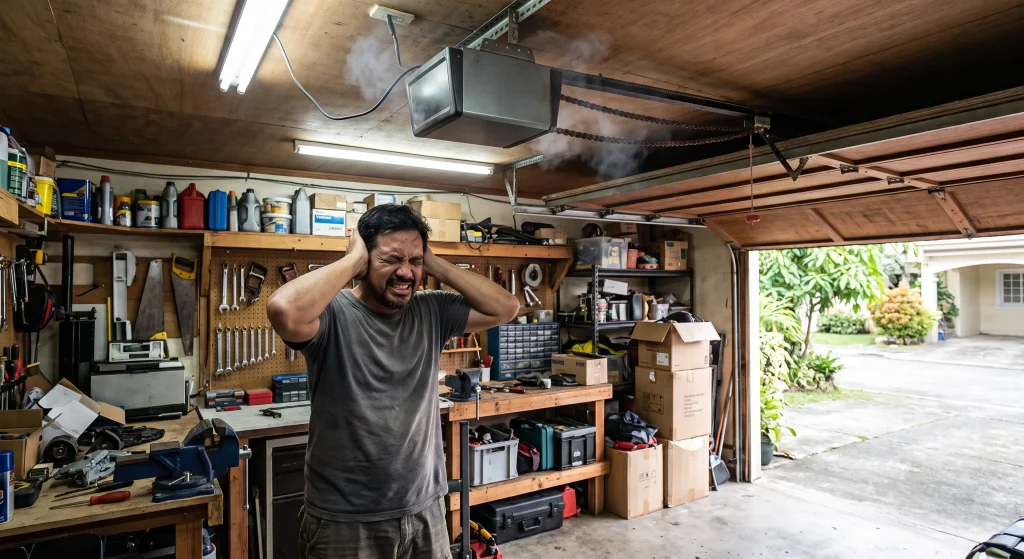
There is nothing quite like the peace of a quiet garage door opener. You press the button, the door glides up, and the whole house barely notices. So when that same unit suddenly starts rattling, grinding, or humming loud enough to wake the kids, it feels like something is very wrong.
Here is the good news for Richmond, TX homeowners. Most of the time, a louder opener is not a sign that the whole system is dying. It rarely means you need a full garage door opener repair right away. It is usually a small, fixable issue that has been building up quietly over time. This guide breaks down the most common reasons an opener gets louder, what to look for, and how to keep the noise from coming back. It also covers simple parts many people overlook, like worn garage door keypads that can point to bigger wear across the system.
This advice comes from years of hands-on experience servicing garage doors across Fort Bend County, where the heat, humidity, and dust put extra stress on every moving part.
Quick Answer: Why Is My Opener Getting Louder?
A quiet garage door opener usually gets louder because of loose hardware, dry or worn rollers, missing lubrication, or normal wear on the belt, chain, or motor. In Richmond, TX, heat and humidity speed up this wear. Regular maintenance solves most noise problems, and only serious cases need a repair or full replacement.
If you are also curious about which units stay silent the longest, the guide “What Is the Most Quiet Garage Door Opener?“ is a great next read.
Loose Hardware Is Vibrating
Every time your door opens and closes, the whole system shakes just a little. Over hundreds and thousands of cycles, that steady vibration slowly loosens bolts, nuts, and brackets. Once a piece of hardware works itself loose, it starts to rattle, and that rattle bounces through the metal tracks and the ceiling.
This is the number one reason a once quiet garage door opener turns noisy. It is also the easiest to notice.
What to check: Look at the bolts on the rail, the mounting brackets on the ceiling, and the hinges along the door. If you see anything that looks loose or wobbly, that is likely part of the problem. A gentle inspection is fine, but leave any real tightening to someone who knows the safe torque, since overtightening can strip parts or bend tracks.
To understand why a well-built unit stays smooth for so long, take a look at the guide “How Does a Quiet Garage Door Opener Work?“
Worn or Dry Rollers
Your garage door rides up and down on small wheels called rollers. Cheaper builder-grade rollers often have plastic or exposed metal bearings. As those bearings wear out or dry up, the rollers start to grind and squeal inside the tracks.
Worn rollers are a huge source of noise, and many homeowners blame the opener when the rollers are actually the guilty party. Upgrading to nylon rollers with sealed bearings is one of the top tricks the pros use to make any door run whisper quiet again.
What to check: Watch the rollers as the door moves. If they wobble, skip, or look chipped, they are worn. Grinding or scraping sounds point straight to the rollers.
If you are weighing whether an upgrade is right for your home, the guide “Is a Quiet Garage Door Opener Worth Installing?“ breaks it all down.
It Simply Needs Lubrication
Metal moving against metal is loud. That is just physics. Over time, the factory lubrication on your rollers, hinges, springs, and rail dries out, especially in a warm climate. Once the grease is gone, everything squeaks and grinds.
A dry system is one of the most common reasons a quiet garage door opener gets louder, and it is often the cheapest to solve. Proper garage door lubrication with the right product can bring back that smooth, silent glide almost instantly.
What to check: Look for dry, rusty, or dusty tracks and hinges. If the metal looks dry rather than lightly coated, lubrication is overdue. Use a product made for garage doors, never regular household oil or grease, which attracts dirt and gums up the works.
Your Garage Door Opener Type Plays a Big Role
Not all openers sound the same, and this is where understanding garage door opener types really pays off. The drive system inside your unit is the biggest factor in how loud it is.
There are a few common garage door opener types on the market:
- Chain drive openers use a metal chain, much like a bicycle. They are strong and affordable but the loudest by far.
- Belt drive openers use a rubber-style belt. They are far quieter and a favorite for garages attached to bedrooms.
- Screw drive openers use a threaded steel rod. They fall somewhere in the middle for noise and need specific care.
- Direct drive and jackshaft models mount differently and are known for being very quiet.
If your opener has always been a little loud, the drive type may simply be the reason. If it used to be quiet and got louder, the drive component is probably wearing out. Knowing your garage door opener types helps you set the right expectations and choose smart when it is time to upgrade.
The Belt, Chain, or Screw Is Wearing Out
Building on the last point, the drive component itself wears down. A chain can stretch and sag, which causes slapping and clanking. A belt can loosen or fray. A screw drive can dry out and grind along its threads.
When these parts get old, even the best garage door opener will start to sound rough. This kind of wear is normal after years of daily use, and it is a clear signal that the system needs attention.
What to check: A sagging chain that bounces as the door moves is a strong sign of stretch. A belt that looks cracked or loose is wearing out. Loud grinding from a screw drive often means the threads need service.
The Motor or Gears Are Aging
Inside every opener is a motor and a set of gears that do the heavy lifting. On many mid-range units, some of those gears are plastic, and plastic wears down over time. A worn gear or a tired motor will often make a grinding or humming noise, and sometimes the door will struggle or hesitate.
Even the best garage door opener will eventually show its age here. Most quality units last many years, but daily use adds up. A DC motor, common in newer quiet models, tends to run smoother and quieter than an older AC motor, which is one reason upgrades feel like such a big improvement.
What to check: Listen for a humming sound where the motor runs but the door barely moves, or a grinding noise from inside the opener housing. Both point to internal wear that a trained technician should inspect.
Your Springs May Be Starting to Fail
Here is something many people do not realize. Your opener does not actually do most of the lifting. The garage door springs carry the real weight. The opener just guides the door.
When springs wear out or lose tension, the opener has to work much harder than it was designed to. That extra strain shows up as loud straining, grinding, or popping sounds. Failing springs are also a safety issue, so this one deserves quick attention.
Important safety note: Garage door springs are under extreme tension and can cause serious injury. This is not a place to experiment. If you suspect a spring problem, that is a clear sign to call a trained professional.
Richmond, TX Heat and Humidity Are Working Against You
Living in Richmond, TX comes with real perks, but the climate is tough on garage doors. Long, hot summers bake the lubrication right out of your rollers and rail. High humidity encourages rust on metal parts. Blowing dust and pollen settle into the tracks and grind against the moving pieces.
All of this means garage doors in Fort Bend County often get louder faster than doors in cooler, drier places. That is not a defect. It is just the local environment doing its thing. The upside is that a smart maintenance routine, done more often here than up north, keeps even a quiet garage door opener sounding great year round.
What to Check Before You Call a Pro
Before picking up the phone, a quick and safe walk-through can help you understand what is going on. Here is a simple checklist:
- Listen closely. Is the noise a rattle, a grind, a hum, or a pop? Each sound points to a different cause.
- Watch the door move. Look for wobbling rollers, a sagging chain, or a door that hesitates.
- Look for dryness or rust. Dry tracks and hinges usually mean lubrication is overdue.
- Scan for loose hardware. Wobbly brackets and bolts are common and easy to spot.
- Notice any struggle. A door that strains or moves unevenly may point to spring or motor trouble.
This checklist is about spotting the problem, not fixing everything yourself. Some parts, like springs and motor gears, carry real risk and need trained hands.
How to Keep Your Opener Quiet for the Long Run
Prevention is always easier than repair. A little routine care goes a long way, especially in the Richmond, TX climate. Here are the habits that keep a quiet garage door opener living up to its name:
- Lubricate regularly. In this heat, two or three times a year with a garage-door-specific product is a smart target.
- Keep tracks clean. Wipe out dust and debris so nothing grinds against the rollers.
- Schedule a yearly tune-up. A pro can catch small issues before they turn into loud, expensive ones.
- Do not ignore new sounds. A small noise today is often a cheap fix. The same noise ignored for months can become a big repair.
- Upgrade worn rollers. Swapping in quality rollers is one of the biggest quiet-boosting moves you can make.
Simple, steady maintenance is the real secret behind every long-lasting, quiet garage door opener.
Repair or Replace? Understanding the Average Cost
At some point, every homeowner wonders whether to fix the current unit or start fresh. Here is a plain-language way to think about it, without getting into exact figures.
If the noise comes from loose hardware, dry parts, or worn rollers, a repair or tune-up usually carries a low average cost and makes total sense. These are minor fixes that restore quiet quickly.
If the motor is grinding, the gears are stripped, or the opener is well over a decade old, replacement often makes more sense. A new unit brings a lower average cost of ownership over time because it runs efficiently, breaks down less, and comes with modern quiet features. When several parts are failing at once, putting money into an old unit rarely pays off.
For spring and motor issues, the average cost of professional service is well worth it for the safety and peace of mind alone.
Choosing a Quieter Unit Next Time
If your opener is near the end of its life, the upgrade market has come a long way. When shopping for the best garage door opener for a quiet home, a belt drive model with a DC motor is a favorite for good reason. It runs smooth, starts and stops softly, and keeps noise to a minimum.
A smart garage door opener adds even more value. A smart garage door opener lets you open, close, and check your door right from your phone, which is a game changer if you have ever driven off wondering whether the door was left open. Many models with smart garage door opener features also send alerts, work with home assistants, and let you grant access to family or delivery drivers without handing out a keypad code.
When comparing the best garage door opener choices, think about three things: the drive type, the motor type, and the smart features you actually want. A quality belt drive smart garage door opener checks every box for a quiet, modern home. Matching the right garage door opener types to your needs is how you land on the best garage door opener for your specific garage.
The best garage door opener is not always the most expensive one. It is the one that fits your door, your home layout, and how much quiet you want. And in a warm climate like Richmond, TX, a smart garage door opener paired with steady maintenance is a combination that is hard to beat.
Keep Your Opener Quiet for Years to Come
A louder opener is your garage door trying to tell you something. Most of the time, the message is simple: a part needs lubrication, a roller is worn, or some hardware has shaken loose. Catch it early and the fix is usually quick and affordable, long before it ever grows into a full new garage door opener replacement.
The Richmond, TX climate does put extra strain on every garage, so a little more maintenance here goes a long way. Stay on top of the basics, listen for new sounds, and do not put off the fixes that need a professional, especially safety-critical jobs like broken garage door spring repair. Do that, and your quiet garage door opener will keep gliding up and down the way it should for years to come.
Trusted Garage Door Care in Richmond, TX
First Call Garage Doors is proud to help Richmond, TX homeowners keep their systems running smooth, safe, and whisper quiet. With hands-on experience across Fort Bend County, our team knows exactly how the local heat and humidity affect every part of your door, and we bring honest advice, quality parts, and friendly service to every visit. Whether it is a quick tune-up, a worn roller swap, or help choosing the best garage door opener for your home, we are the name neighbors trust. Contact us today or give us a call to get your opener back to quiet.
Frequently Asked Questions
Is a loud garage door opener dangerous?
Not always, but a straining or popping sound can point to spring trouble, which is a real safety risk. Get that checked fast.
What garage door opener types are the quietest?
Belt drive and direct drive models are the quietest. Among the garage door opener types, chain drive is the loudest.
Can lubrication really make my opener quiet again?
Yes. Dry metal is a top cause of noise. The right garage-door lubricant often restores quiet almost right away.
How often should I service my opener in Richmond, TX?
Lubricate two to three times a year and get a yearly tune-up. The local heat and humidity call for more frequent care. For general upkeep tips, Family Handyman is a helpful resource.
Do I need to replace my opener if it is noisy?
Not usually. Most noise comes from minor issues. Replacement makes sense mainly when the motor or gears are failing. For more on repair-versus-replace decisions, Bob Vila offers solid guidance.
What is the best garage door opener for a quiet home?
A belt drive model with a DC motor. It runs smooth and soft, which is why the best garage door opener picks favor that build.
Are smart garage door opener models worth it?
Yes. A smart garage door opener lets you control and monitor your door by phone, adds alerts, and boosts security.
Why do garage doors get louder faster in Texas?
Heat bakes out the grease, humidity causes rust, and dust grinds the tracks. All of it speeds up normal wear.
Should I fix the noise myself?
Simple checks are fine, but leave springs, motor work, and hardware tightening to a pro for safety and correct results.