
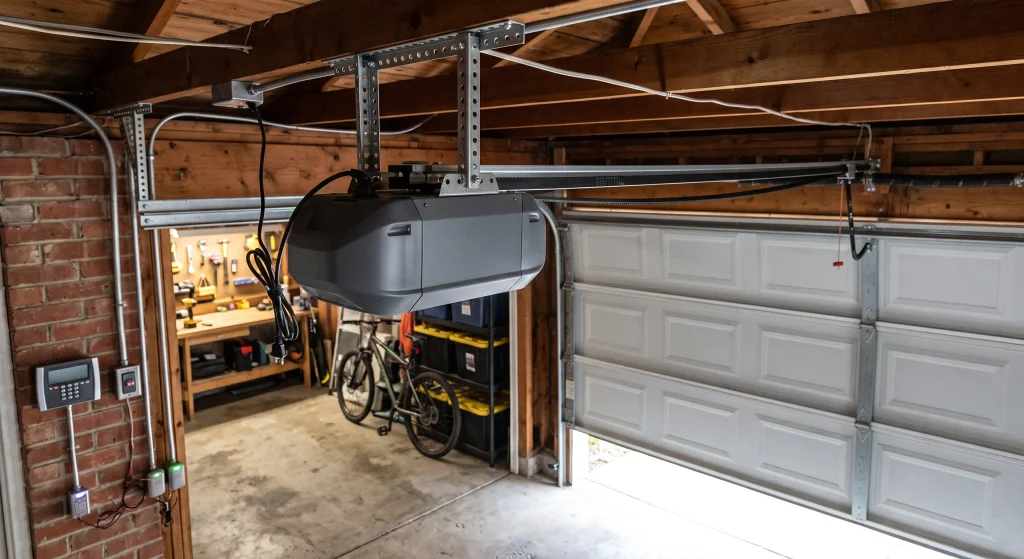
If your garage sits under a bedroom or shares a wall with a living space, the answer matters more than you might think. The most quiet garage door opener is a belt drive model, closely followed by a jackshaft (wall-mount) opener. Both run on a smooth system that cuts down on the rattle and grinding that older units make. For families in Richmond, TX, where many homes have attached garages and second-floor rooms right above them, a quiet garage door opener can be the difference between waking the kids at 6 a.m. and slipping out without a sound.
Below is a clear breakdown of the different garage door opener types, why some are so much quieter than others, and what to do when your current unit starts sounding like a freight train. Whether you need simple garage door opener repair, a quiet upgrade, or even matching accessories like garage door keypads, knowing your options makes the choice much easier.
Why Garage Door Noise Matters (Especially in Richmond, TX)
A loud garage door is more than an annoyance. In many Richmond neighborhoods, homes are built close together, and garages often open toward the street or a shared driveway. That means noise travels fast to your bedrooms and to your neighbors.
Hot, humid Gulf Coast weather also plays a part. Heat and moisture can dry out lubrication, expand metal parts, and speed up wear on rollers and springs. Over time, a door that once ran smoothly can start to bang and squeal. Choosing a quiet garage door opener from the start, and keeping up with basic care, helps your system stay peaceful for years.
Noise is also a warning sign. A door that suddenly gets louder is often telling you that something needs attention. Ignoring it can turn a small fix into a bigger repair.
Curious about the mechanics behind a silent door? Take a look at the guide “How Does a Quiet Garage Door Opener Work?“ for a closer look under the hood.
How Garage Door Opener Types Rank From Quietest to Loudest
Not all openers are built the same. The single biggest factor in how loud your door is comes down to the drive system. Here are the four main garage door opener types, ranked from the quietest to the loudest.
Belt Drive Openers (Quietest)
A belt drive opener uses a strong rubber belt (similar to the belts in your car) to move the door up and down. Because rubber flexes and absorbs shock, there is almost no metal-on-metal contact. That is why belt drive units are widely known as the most quiet garage door opener option on the market.
These openers are a favorite for homes where the garage sits below or beside a bedroom. They run smoothly, they vibrate very little, and pairing them with a strong DC motor makes them even quieter. If a silent operation is the top goal, a belt drive is usually the best garage door opener for the job.
Jackshaft / Wall-Mount Openers (Very Quiet)
A jackshaft opener mounts on the wall beside the door instead of on the ceiling. It turns the torsion bar directly, so there is no long rail or trolley overhead. With less hardware moving above your head, there is less noise and vibration passing into the ceiling and the rooms above.
Jackshaft models also free up ceiling space, which is handy for tall vehicles or overhead storage. Many homeowners in newer Richmond builds like this style because it keeps the garage clean and quiet. It sits right near the top of the list among the best garage door opener choices for noise-sensitive homes.
Screw Drive Openers (Middle of the Pack)
A screw drive opener uses a threaded steel rod to move the door. It has fewer moving parts than a chain drive, so it lands in the middle for noise. These units can run fairly quietly when they are well cared for, but they are sensitive to temperature swings.
That matters in Richmond, where summer heat and winter cool-downs can affect how the steel rod expands and contracts. Without regular care, a screw drive can start to hum and grind. It is a solid middle option among garage door opener types, but it is not as quiet as a belt drive.
Chain Drive Openers (Loudest)
A chain drive opener uses a metal chain, much like a bicycle chain, to pull the door open. It is strong, reliable, and usually the most budget-friendly. The trade-off is noise. The metal chain rattles and clanks, and that sound carries.
For a detached garage far from the house, a chain drive is fine. But for an attached garage under a bedroom, it is the loudest of the garage door opener types and the least ideal if quiet is what you are after.
Still weighing whether a quieter upgrade is right for you? The article “Is a Quiet Garage Door Opener Worth Installing?“ breaks down exactly when the switch pays off.
5 Features That Make the Best Garage Door Opener Quiet
The drive type is the biggest factor, but it is not the only one. When shopping for a quiet garage door opener, look for these five features.
- DC motor with soft start and stop. A DC motor eases the door into motion and slows it down before it stops. This removes the hard jerk that causes so much banging.
- Belt or direct drive system. As covered above, belts and jackshaft designs beat chains and screws for silence.
- Vibration isolation hardware. Rubber mounts and isolation pads keep the motor’s hum from traveling into the ceiling joists and the rooms above.
- Quality rollers. Nylon rollers with sealed bearings glide much more quietly than basic steel rollers.
- Solid build quality. A well-built unit with tight, sturdy parts simply rattles less over time.
A model that checks most of these boxes will feel like the best garage door opener you have ever owned, even years down the road.
Already have a quiet unit that has started acting up? The post “Why Is My Quiet Garage Door Opener Getting Louder?“ walks through the most common reasons the noise creeps back.
What to Check If Your Opener Is Getting Louder
A door that suddenly turns noisy is asking for attention. Before assuming the whole unit needs replacing, here are the common places where noise starts. Knowing what to look for helps you have a smarter talk with a local Richmond technician.
- Rollers. Worn or dry rollers are one of the most common noise sources. If they look chipped or wobble in the track, they are often the cause.
- Loose hardware. Bolts, nuts, and brackets can shake loose over time and buzz during operation.
- Springs. Squeaky or straining springs can signal wear. Springs are under heavy tension and are not a safe do-it-yourself task, so this one is best left to a pro.
- Tracks. Bent tracks or debris in the track can make the door bang and drag.
- The opener itself. If the motor grinds even after the door is serviced, the unit may be near the end of its life.
A quick tip: listen for where the sound is coming from. A rattle usually points to loose hardware or rollers. A grinding sound often points to the motor or springs. This is helpful information to share when you call for service.
Simple Tips to Keep a Quiet Garage Door Opener Quiet
Even the most quiet garage door opener will get noisy if it is neglected. A little routine care goes a long way, especially in the Richmond climate where heat and humidity speed up wear.
- Keep it clean. Wipe down the tracks and clear out leaves, dust, and cobwebs a couple of times a year.
- Watch the balance. Once in a while, notice if the door seems to strain or move unevenly. An unbalanced door forces the opener to work harder and get louder. Balancing involves the springs, so leave that adjustment to a technician.
- Book a yearly tune-up. A yearly garage door tune-up is the single best habit for keeping things quiet. A trained tech tightens hardware, checks the springs safely, and swaps worn rollers before they become a problem.
- Do not ignore new sounds. A new squeak or clunk is easier and cheaper to address early than after it turns into a breakdown.
The goal here is prevention. Catching small issues keeps the door quiet and helps your opener last longer. Note that spring work, cable work, and motor repairs are jobs for a licensed professional. They involve high tension and safety risks that are not worth the danger of a do-it-yourself attempt.
Why a Smart Garage Door Opener Adds Comfort and Peace of Mind
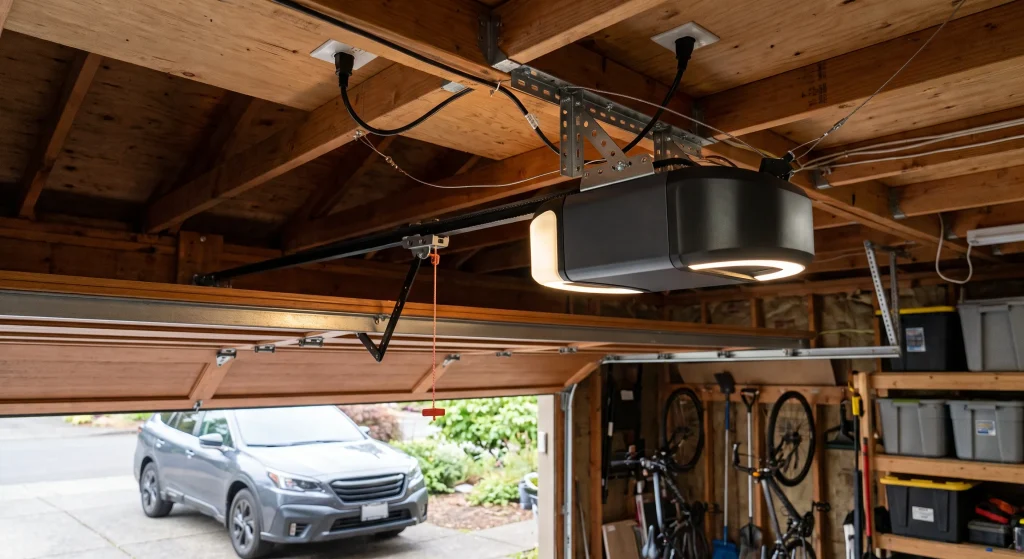
A smart garage door opener connects to your phone through Wi-Fi. It will not, on its own, make the door quieter, but the newest smart models almost always come paired with quiet belt or jackshaft systems and strong DC motors. So choosing a smart garage door opener often means getting quiet operation as part of the package.
The added perks are real. A smart garage door opener lets you check if the door is closed while you are away, get alerts if it opens unexpectedly, and let in a delivery or a family member without being home. For busy Richmond families, that mix of quiet and control is a big reason smart models have become so popular. When comparing the best garage door opener options today, a smart unit with a belt drive is hard to beat.
Average Cost to Expect in Richmond, TX
Costs vary based on the brand, the drive type, and whether extra hardware is needed. As a general guide for the Richmond, TX area, a new quiet belt drive or smart garage door opener, professionally installed, tends to sit in the low-to-mid range for home upgrades. Jackshaft models usually run a bit higher because of the design and mounting.
A yearly tune-up is one of the more affordable services and is well worth the average cost for how much wear and noise it prevents. Roller replacement is also fairly low in cost. Spring repairs land in the mid range and should always be handled by a professional. Always ask a local Richmond company for a written estimate so you know what is included before any work begins.
Your Quietest Path Forward
So, what is the most quiet garage door opener? A belt drive model paired with a DC motor and soft start and stop takes the top spot, with a jackshaft opener close behind. When you look across all the garage door opener types, these two consistently deliver the smoothest, quietest ride. Add smart features and you get a quiet garage door opener that is also convenient and secure.
For homes in Richmond, TX, where attached garages sit close to living space and the climate is tough on hardware, choosing a quiet unit and keeping up with a yearly tune-up is the smartest move. Whether you are planning a new garage door opener replacement, need a broken garage door spring repair, or are simply upgrading to a belt drive smart garage door opener, this is one of the best garage door opener choices you can make for a peaceful, reliable home.
Ready for a Quieter Garage?
First Call Garage Doors is proud to help Richmond, TX homeowners enjoy quieter, smoother, and more reliable garage doors every day. With a friendly team that knows the local climate and the latest quiet garage door opener technology, the right upgrade or tune-up is only a phone call away. Trust a local name that puts your comfort and safety first. Contact us today or give us a call to find the best garage door opener for your home.
Frequently Asked Questions
Are belt drive openers really quieter than chain drive?
Yes. A belt flexes and absorbs shock, while a chain clanks against metal. The difference in noise is easy to hear.
Why did my garage door opener suddenly get louder?
Usually worn rollers, loose hardware, or aging springs. Have it inspected soon, since early fixes are simpler and cheaper.
Does a smart garage door opener run quieter?
The smart feature itself does not affect noise, but most smart models use quiet belt drives and DC motors, so they tend to be very quiet.
How often should a garage door opener be serviced in Richmond, TX?
Once a year. The Gulf Coast heat and humidity wear on parts faster, so an annual tune-up keeps it quiet and reliable. For more on maintenance value, Consumer Reports offers helpful guidance.
Can I fix a noisy garage door myself?
You can clean the tracks and clear debris. Leave springs, cables, and motor work to a licensed pro, since those carry real safety risks. Resources like This Old House cover what is safe to handle at home versus what needs a professional.
What is a jackshaft opener?
It mounts on the wall beside the door instead of the ceiling. It runs quietly and frees up overhead space.
Are screw drive openers a good quiet option?
They sit in the middle. They can run fairly quiet with care, but temperature swings in Richmond can make them noisier over time.
What features should I look for in a quiet opener?
A DC motor with soft start and stop, a belt or jackshaft drive, vibration isolation hardware, and quality nylon rollers.
Is a quiet garage door opener worth the average cost?
For an attached garage near bedrooms, yes. The comfort, lower noise, and longer lifespan easily justify the average cost.