

Delve into the world of best garage door designs by understanding the different materials and construction methods that impact durability and aesthetics.
The garage door is more than just an entryway to a home’s storage space—it’s a prominent architectural feature that significantly impacts curb appeal, security, and energy efficiency. For homeowners looking to upgrade or replace their current installation, understanding the fundamental aspects of best garage door designs is essential for making an informed decision that balances aesthetics with functionality. The material composition and construction quality determine a garage door’s durability, maintenance requirements, and overall performance.
First Call Garage Doors has established itself as a trusted industry authority, providing homeowners with expert information and professional services to navigate these critical considerations. This comprehensive guide aims to educate property owners on the crucial elements of garage door materials and construction, empowering them to select options that best suit their specific needs and preferences.
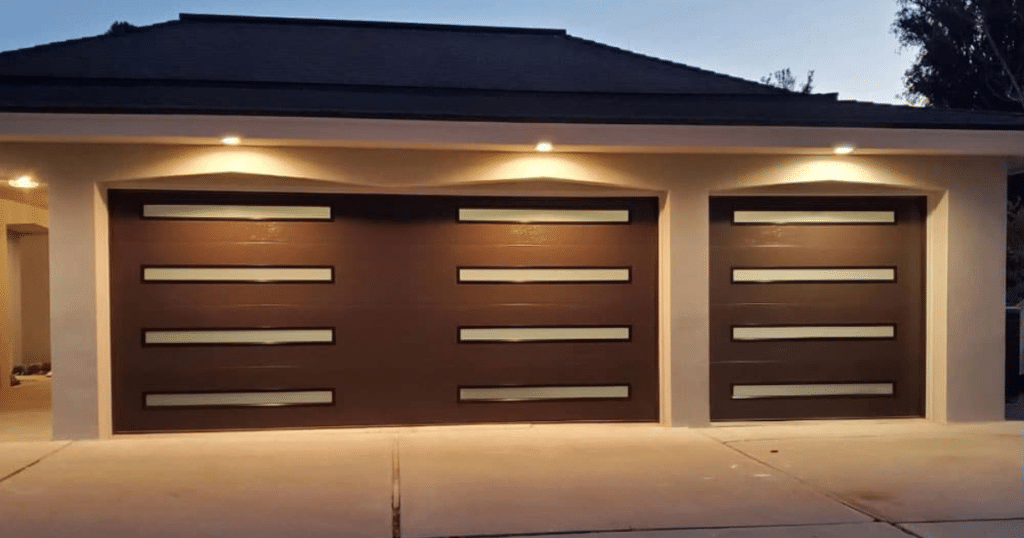
The Best Garage Door Designs: Material Choice Considerations
The material selection for a garage door significantly influences nearly every aspect of its performance and appearance. This choice affects the immediate visual impact and long-term satisfaction with the investment.
Durability and longevity are primary considerations when evaluating garage door materials. Different options offer varying resistance levels to environmental factors such as extreme temperatures, moisture, salt air, and physical impacts. While some materials may require replacement after a decade, others can adequately maintain their structural integrity for generations.
The aesthetic contribution of a garage door cannot be overstated, as it typically comprises up to 30% of a home’s visible exterior. The material choice directly determines the available design options, textures, and finishes that complement the home’s architectural style. The best garage door designs harmonize with existing elements while potentially enhancing the overall visual appeal of the property.
Maintenance requirements vary significantly between materials, with some demanding regular attention to preserve their appearance and functionality. When selecting garage door material, homeowners should realistically assess their willingness to perform ongoing upkeep.
Energy efficiency considerations have become increasingly important as homeowners seek to reduce utility costs and environmental impact. The insulative properties of different materials directly affect the garage’s temperature regulation, which can influence adjacent living spaces and vehicle protection.
Common Garage Door Materials
Steel Garage Doors
Steel represents the most widely chosen material for residential garage doors, accounting for approximately 70% of installations. This metal offers exceptional strength and security while providing remarkable versatility in design options. Modern manufacturing processes allow steel doors to mimic the appearance of other materials, including wood grain textures.
When properly finished, Steel’s advantages extend to its resilience against environmental factors and physical impacts. These doors resist warping, cracking, and expansion in varying weather conditions. Additionally, steel provides an excellent substrate for insulation, allowing for improved thermal performance with foam-injected panels.
Considerations for steel doors include potential susceptibility to rust in coastal or high-humidity environments, particularly with lower-gauge (thinner) options. However, high-quality galvanized coatings and proper maintenance can effectively mitigate this concern. When exploring the best garage door designs, steel offers an excellent balance of durability and customization options.
Wood Garage Doors
Wood garage doors deliver unmatched natural beauty and authentic character that many homeowners find irresistible. These doors can be crafted from various species, including cedar, redwood, cypress, and oak, each offering distinctive grain patterns and coloration. The material allows for extensive customization through carving, panel configuration, and finish options.
Wood’s advantages include its natural insulative properties and the ability to repair garage door rather than replace damaged sections. Wood doors contribute a warm, traditional aesthetic that many consider the epitome of elegant design for historic or craftsman-style homes. Wood doors contribute a warm, traditional aesthetic that many consider the epitome of elegant design for historic or craftsman-style homes.
Considerations for wood include higher initial cost and maintenance requirements. These doors typically need periodic sanding, staining or painting, and sealing to prevent moisture damage. Wood remains vulnerable to warping, rotting, and insect infestation without proper care. First Call Garage Doors often recommends these premium options for homes where architectural authenticity is a priority.
Aluminum Garage Doors
Aluminum has become a garage door material, particularly in contemporary architectural applications. This lightweight metal offers inherent resistance to rust and corrosion, making it especially suitable for coastal properties exposed to salt air.
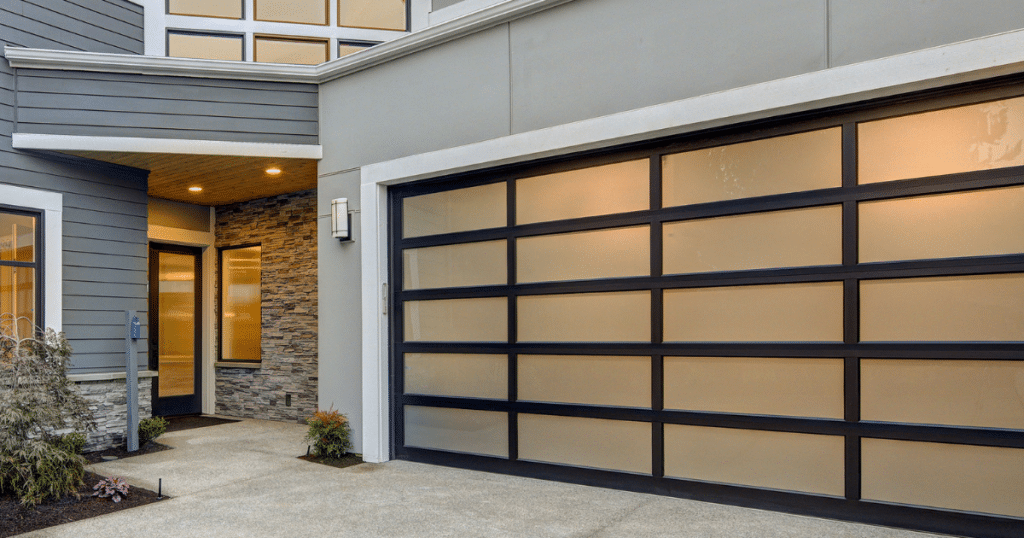
Aluminum’s advantages include accommodating larger door sizes without excessive strain on operating mechanisms. Modern aluminum doors feature substantial glass sections for a sleek, contemporary appearance with natural light transmission.
Considerations include aluminum’s susceptibility to denting from impacts and its limited insulative properties when used alone. However, manufacturers have addressed these concerns with premium models’ reinforced extrusions and thermal breaks. The best garage door designs for ultra-modern homes often incorporate aluminum with glass elements.
Fiberglass Garage Doors
Fiberglass offers a compelling alternative for homeowners seeking durability with reduced maintenance requirements. These doors typically consist of a fiberglass overlay bonded to a steel or aluminum frame, combining the strengths of multiple materials.
The advantages include exceptional resistance to environmental factors such as salt air, humidity, and extreme temperatures. Fiberglass resists fading, denting, and cracking while providing good insulation value. These doors can convincingly replicate wood grain patterns without the associated maintenance.
Considerations include higher initial cost and the possibility of color fading over time in locations with intense UV exposure.
Composite Garage Doors
Composite materials represent one of the most innovative categories in modern door construction. These engineered products combine wood fibers with polymer resins to create doors with impressive performance characteristics.
The advantages include extraordinary dimensional stability, resistance to moisture and insects, and the authentic appearance of natural wood. Composite doors typically require minimal maintenance while delivering excellent durability in diverse climates.
Considerations primarily revolve around higher initial investment, though this is often offset by reduced long-term maintenance costs and extended service life. The best garage door designs using composite materials deliver exceptional value for homeowners seeking wood aesthetics without maintenance concerns.
Key Aspects of Garage Door Construction
Beyond material selection, the structural design and component quality significantly impact a garage door’s performance, safety, and longevity. First Call Garage Doors emphasizes these critical construction elements when helping customers evaluate their options.
Panel Construction
Modern garage doors utilize several distinct panel construction approaches:
- Single-layer panels provide basic functionality with minimal insulation
- Double-layer panels incorporate a layer of insulation behind the exterior material
- Triple-layer panels sandwich insulation between exterior and interior panels for maximum thermal efficiency
Insulated panels deliver multiple benefits beyond temperature regulation, including improved structural rigidity, noise reduction, and protection against denting for steel doors.
Track Systems
The track system guides the door’s movement and supports its weight when in the open position. Different configurations accommodate varying architectural needs:
- Standard lift tracks suit most residential applications with typical ceiling heights.
- High lift tracks provide additional clearance between the door and ceiling when open.
- Vertical lift tracks allow the door to travel vertically, which is ideal for commercial applications with high ceilings.
Quality track systems feature heavy-gauge galvanized steel with precision alignment to ensure smooth, quiet operation throughout the door’s lifespan.
Roller Types
Rollers create the essential contact point between the door and track system, directly influencing operational noise and maintenance requirements. Premium garage doors typically feature nylon rollers with sealed bearings, producing significantly quieter operation and extended service life than standard steel rollers.
Hinges and Brackets
These components connect door sections and attach rollers to the door assembly. Their quality directly affects the door’s structural integrity during thousands of operation cycles.
Commercial-grade hardware offers improved longevity and performance for residential applications experiencing frequent use.
Springs (Torsion vs. Extension)
The counterbalance system allows manual operation and reduces strain on automatic openers. Torsion springs mount horizontally above the door opening and deliver superior balance, a longer lifespan, and safer operation than extension springs that run parallel to the horizontal tracks.
Professional installation of these critical components ensures proper adjustment and safe operation. Quality systems typically carry warranties of three to ten years.
Choosing the Right Material and Construction for Your Needs
Selecting the optimal garage door requires careful consideration of several factors beyond aesthetics alone.
Climate and geographical location significantly influence material suitability. Coastal areas with salt exposure may favor aluminum or fiberglass, while extreme temperature fluctuations might prioritize insulated steel or composite options. Areas prone to severe weather events should emphasize impact resistance and structural integrity.
Budget considerations naturally affect material selection, with steel typically offering the most economical entry point while wood and custom designs represent premium investments. First Call Garage Doors helps customers evaluate total lifecycle costs, including maintenance requirements and energy savings potential.
Architectural compatibility ensures the garage door enhances rather than detracts from the home’s overall appearance. Traditional homes often benefit from raised-panel designs and carriage house styles, while contemporary architecture typically complements sleek, minimalist door designs with glass elements.
Usage patterns should inform construction quality considerations. Homes with frequent garage access benefit from commercial-grade components and higher insulation values, while secondary garages with limited use may adequately serve with more basic configurations. The best garage door designs balance these practical considerations with aesthetic preferences.
Working with Professionals
Professional consultation provides invaluable guidance through the complex decision matrix of garage door selection. Experienced technicians can identify architectural considerations and structural requirements that might escape homeowners’ attention when evaluating options independently.
Professional installation ensures the proper setup of all mechanical components, particularly the critical counterbalance system that prevents dangerous door weight from causing injury or property damage. First Call Garage Doors emphasizes that proper installation also preserves manufacturer warranties and optimizes long-term performance.
Regular professional maintenance extends service life while identifying potential safety concerns before they lead to failures. Qualified technicians can make precision adjustments to balance, alignment, and operation that maintain smooth functionality and prevent premature component wear.
FAQs
What type of material is best for a garage door?
The “best” material depends on your priorities. Steel is durable and low-maintenance, wood offers a classic aesthetic but requires more upkeep, aluminum is lightweight and rust-resistant, and fiberglass is a good insulator and resists dents. Consider factors like cost, maintenance, insulation needs, and desired appearance.
How do I choose a garage door design?
Consider your home’s architectural style, your personal preferences, and the level of insulation and security you need. Look at different panel styles, window options, and colors to find a design that complements your property and meets your functional requirements.
What is the rough opening for garage door framing?
The rough opening for a garage door should be about 2 inches wider and 1 inch taller than the actual door dimensions. This extra space allows for adequately installing and adjusting the door and tracks.
How do you adjust garage door limits?
Garage door opener limits define how far the door opens and closes. Most openers have adjustment screws or buttons that you can use to set these limits. Refer to your opener’s manual for specific instructions on correctly adjusting them.
What are the requirements for framing a garage door?
Framing a garage door involves constructing a sturdy rectangular opening using vertical studs and horizontal headers. The header, which supports the weight above the door, must be appropriately sized based on the door’s width and the load it needs to bear, and the entire frame should be level and plumb.
Conclusion
The selection of appropriate materials and construction quality for a garage door represents a significant investment decision with long-term implications for home aesthetics, functionality, and value. By understanding the fundamental characteristics of available options, homeowners can confidently navigate the selection process to identify the best garage door designs that align with their needs and preferences.
From traditional wood carriage house styles to modern full-view aluminum creations, the perfect garage door balances appearance with performance requirements. First Call Garage Doors remains committed to guiding homeowners through this vital decision process with expert consultations and professional installation services that ensure optimal results.
End Note
At First Call Garage Doors, we deliver reliable, affordable garage door solutions throughout our service area and surrounding communities. Our commitment to quality service and customer satisfaction makes us the trusted choice for residential and commercial overhead door needs. We take pride in offering comprehensive expertise on the best garage door designs for every architectural style and functional requirement.
Visit our website to learn more about our services, schedule maintenance, or request emergency repairs. We ensure that your garage door operates safely and efficiently for years. Connect with us online or call us today to experience the difference professional garage door service can make. Trust First Call Garage Doors for all your overhead door needs.